DISPATCHES / DESIGN / 10 MIN READ
The Four Games Inside the Game
Order of the Sinking Star is four puzzle games in one, and each of its four regions is an expansion of a small, freely available browser game that existed years before development began. Understanding where they came from explains why the world feels the way it does.
01 · DESIGN
An Idea About Combination
The game's structure did not begin as a design for a world map. It began as a question asked during the making of an earlier project: what would happen if, instead of combining abstract puzzle symbols into more complex symbols, you combined things that were already complete games in their own right?
That question is the whole architecture. Four regions sit on the overworld, each with its own mechanics, each internally consistent, each recognisably a small game. At the start, everything the player uncovers belongs to exactly one of them, and the separation is deliberate — each region has to be learnable on its own before any of them can meet.
The idea only pays off at the point of contact. Individually, each region is a well-made expansion of an existing design. Together, they produce puzzles that could not have existed in any of the sources, because none of the sources had the others to collide with.
02 · DESIGN
The Heroes of Sokoban
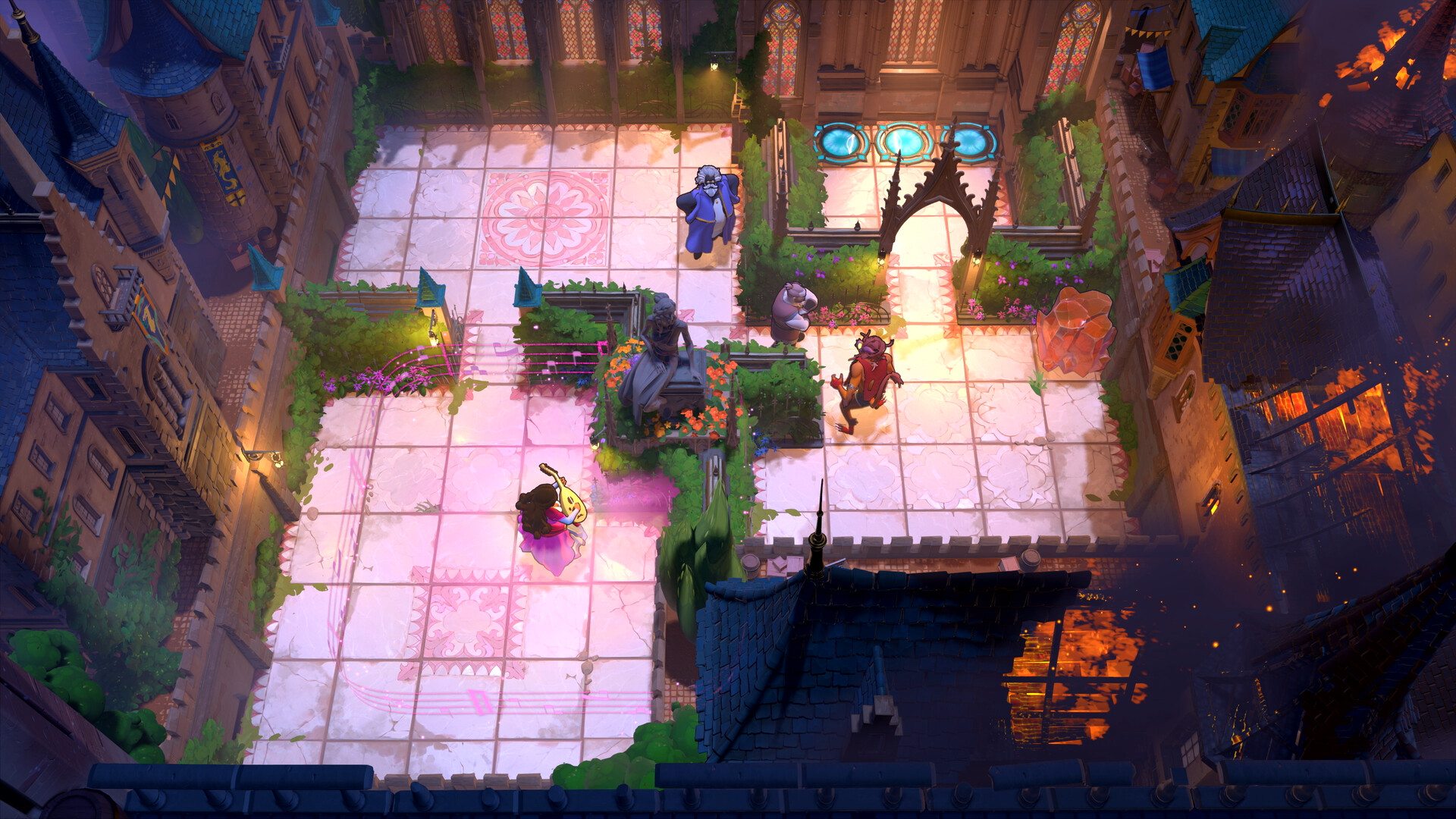
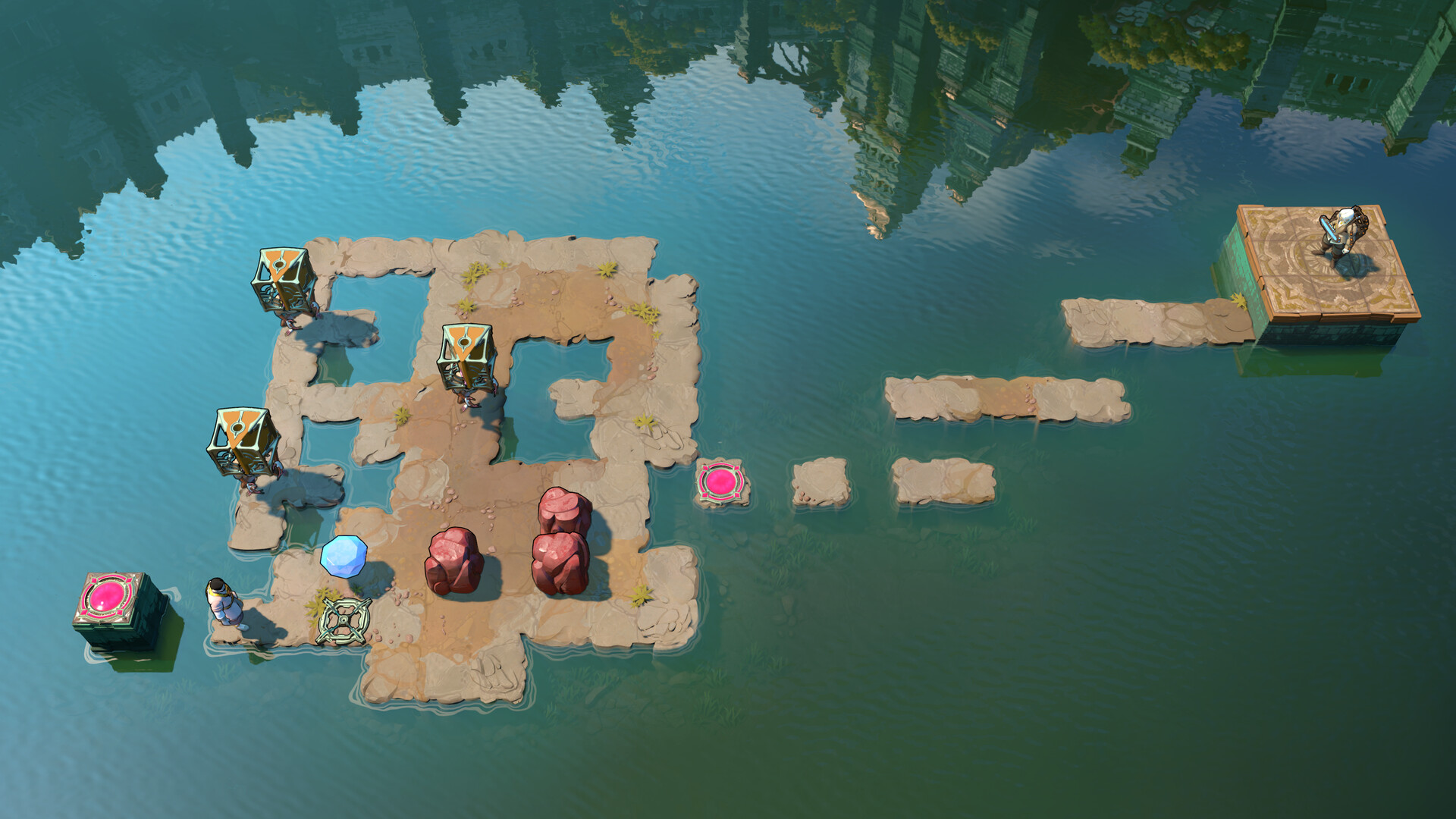
The northern region takes its rules from a browser puzzle game about role-playing archetypes whose class abilities have been recast as movement abilities. The folk memory of the genre is present immediately: a warrior, a mage, a thief, and the expectation that each will be able to do something the others cannot.
What the region does with that inheritance is turn each class into a distinct physical rule. The warrior's strength becomes the ability to push several blocks at once rather than one. The thief's stealth becomes an automatic drag — she cannot push, but she takes things with her. The mage becomes a positional swap. The game keeps the vocabulary of the source and rebuilds its grammar.
This is the region where the party, and the argument about the party, lives. It is also the region that most clearly demonstrates the design principle behind the whole structure: take a complete idea, and then change one thing about how it works.
03 · DESIGN
The Mirror Isles
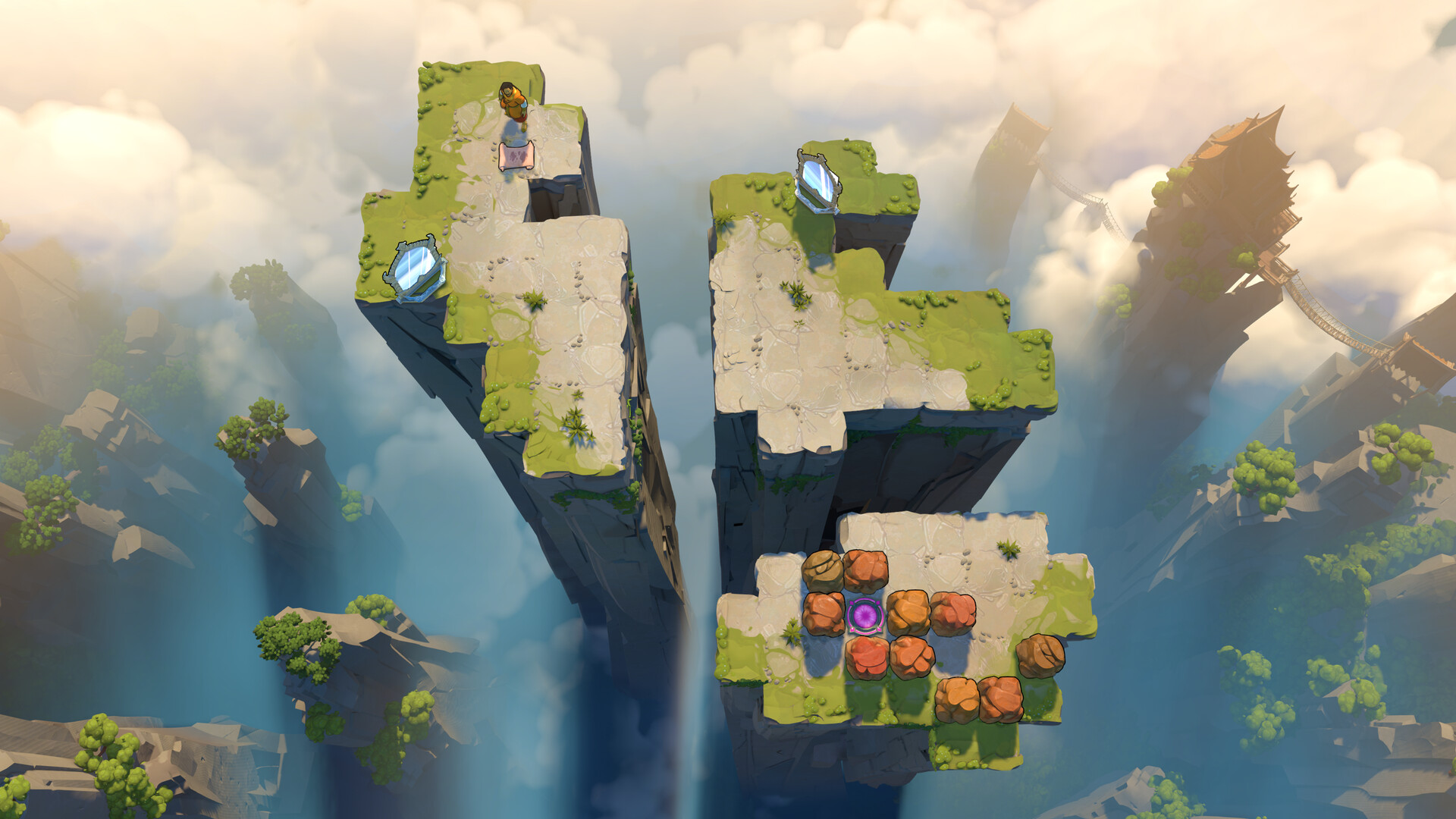
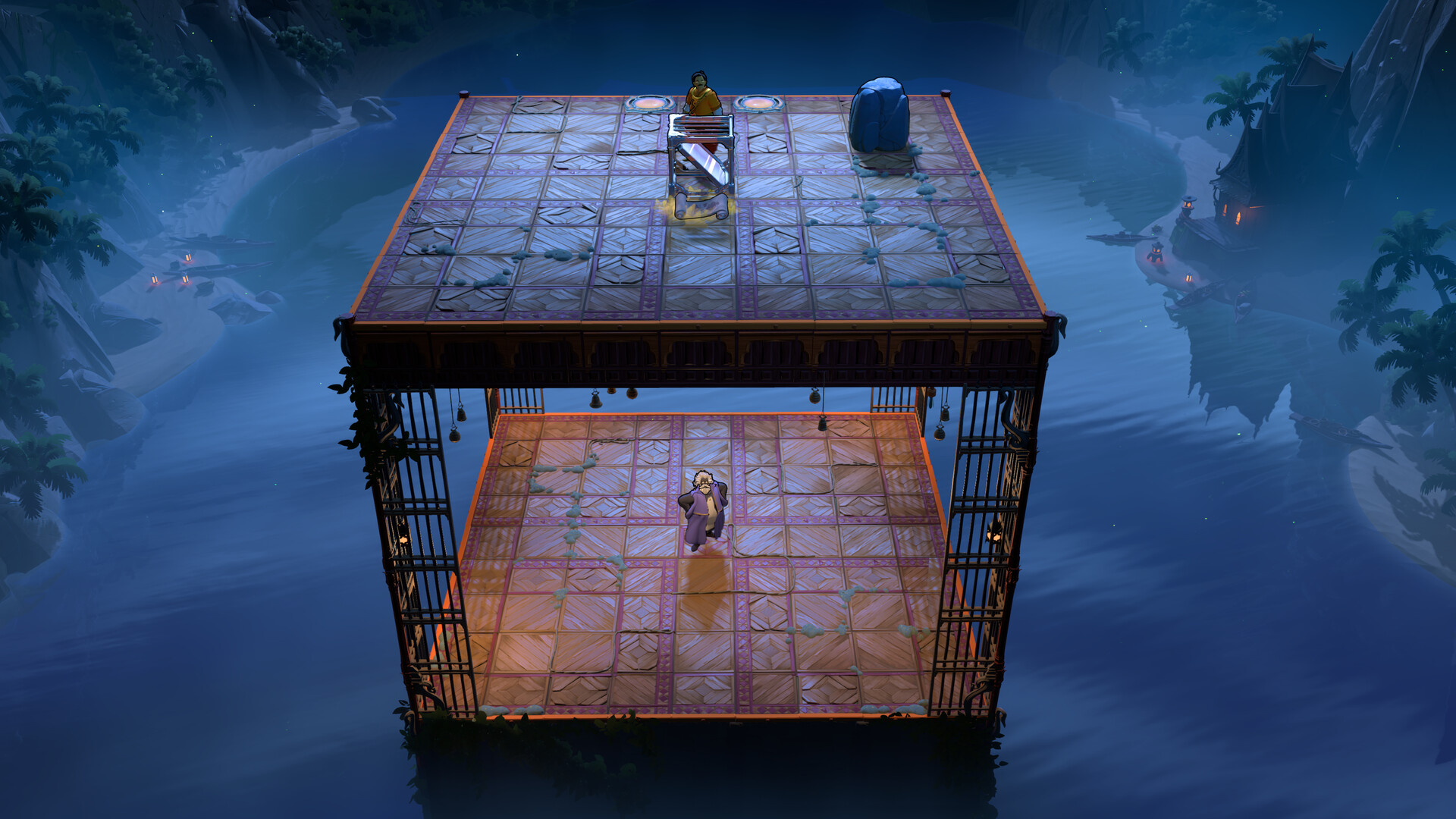
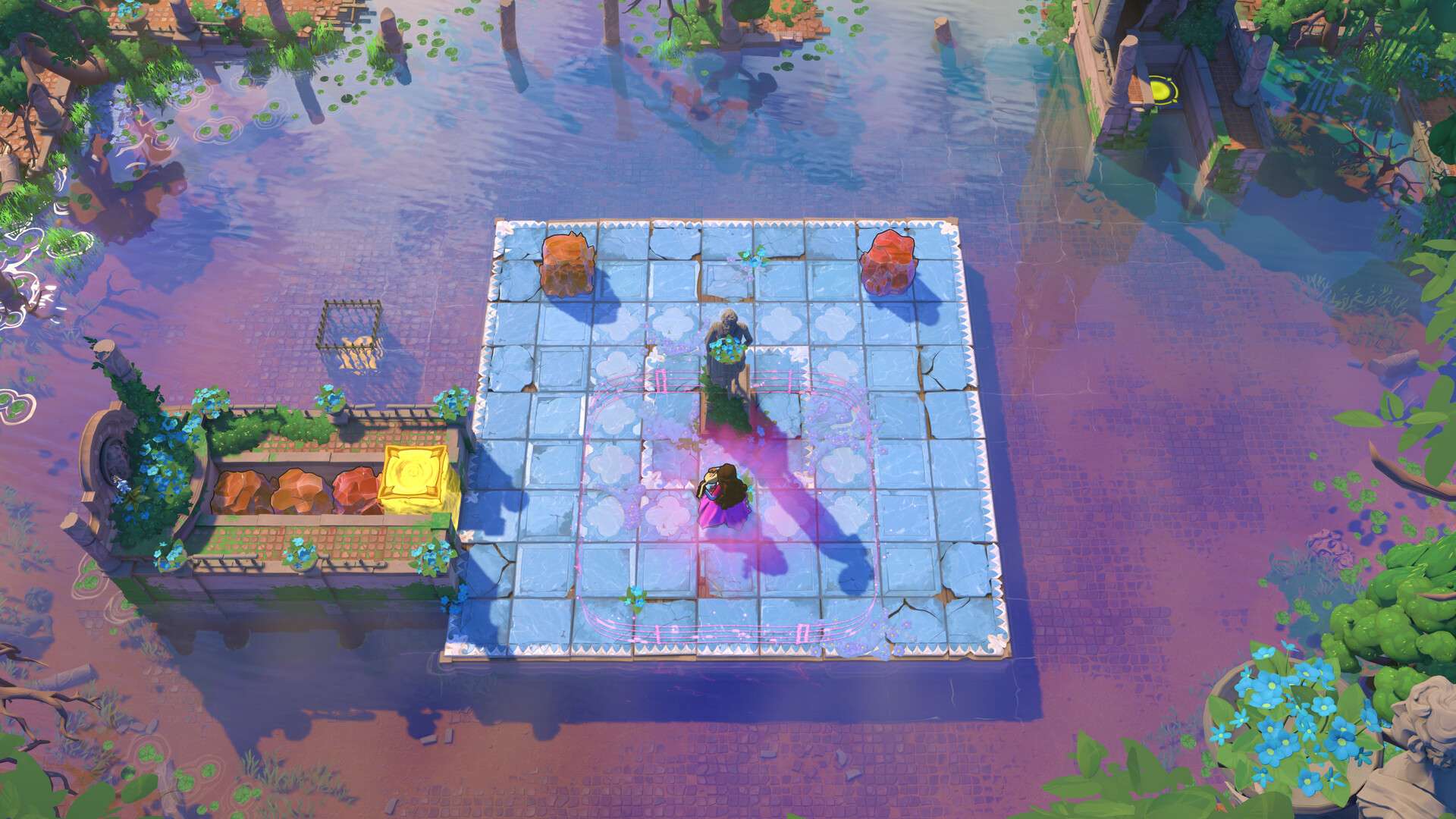
The eastern region is built from a game about mirrors that teleport objects at right angles. The premise is narrow and elegant — a mirror is not a wall and not a door, but a redirect — and it produces puzzles about position and momentum rather than about obstacles.
Expanded into a full region, the mirror mechanics support arrangements that the original could not: mirrors that move, mirrors that are pushed into water, and mirrors arranged so that a single object can be routed through a space in several directions in sequence. The visual language of the game — reflective surfaces, precise geometry, careful sightlines — reads as a direct inheritance from this source.
The region is also where the game's interest in line of sight becomes explicit. When a mirror is a tool rather than a barrier, what a character can see becomes as important as where a character can walk, and that idea carries forward into every region that follows.
04 · DESIGN
Skipping Stones and Beams
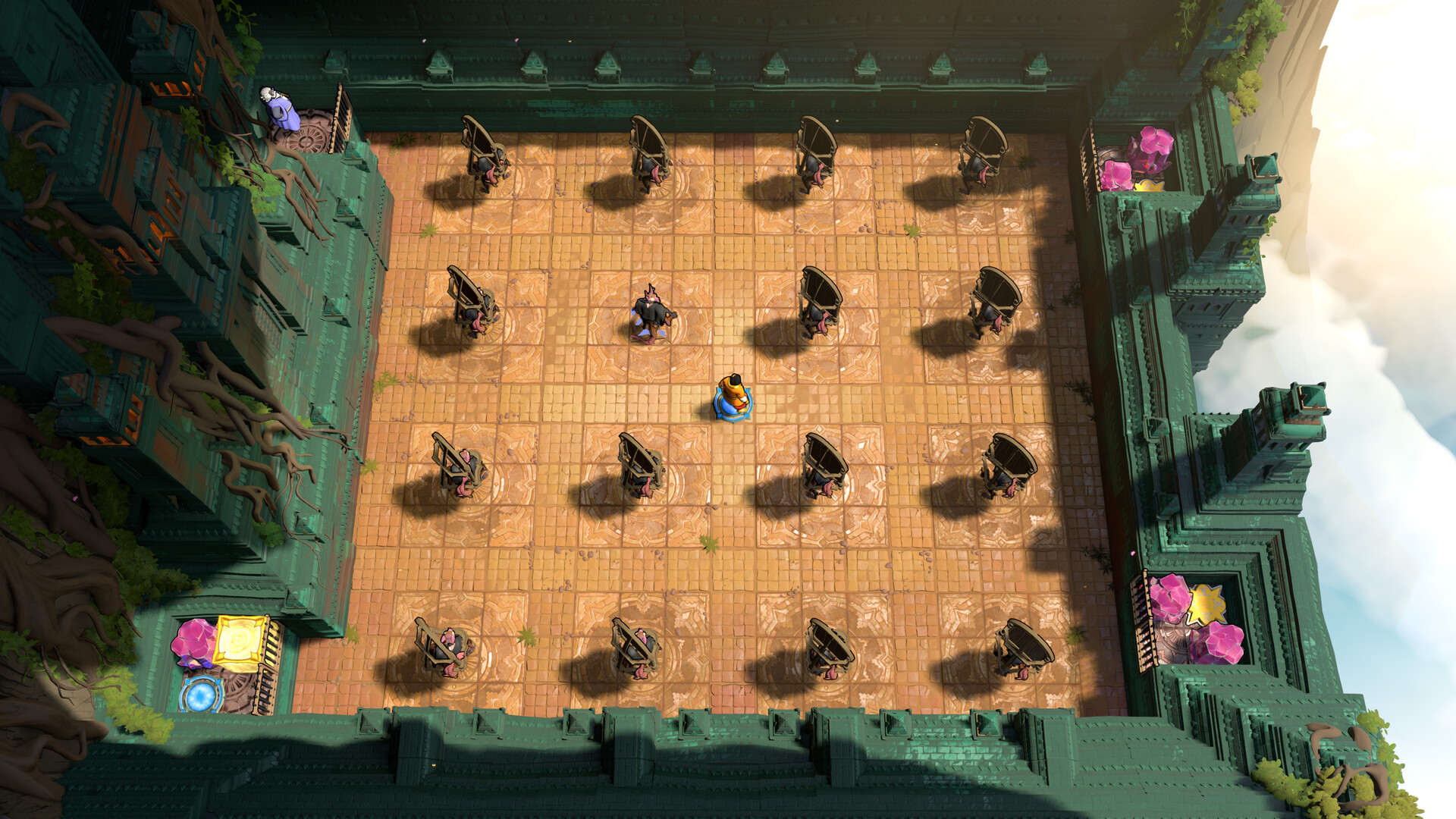
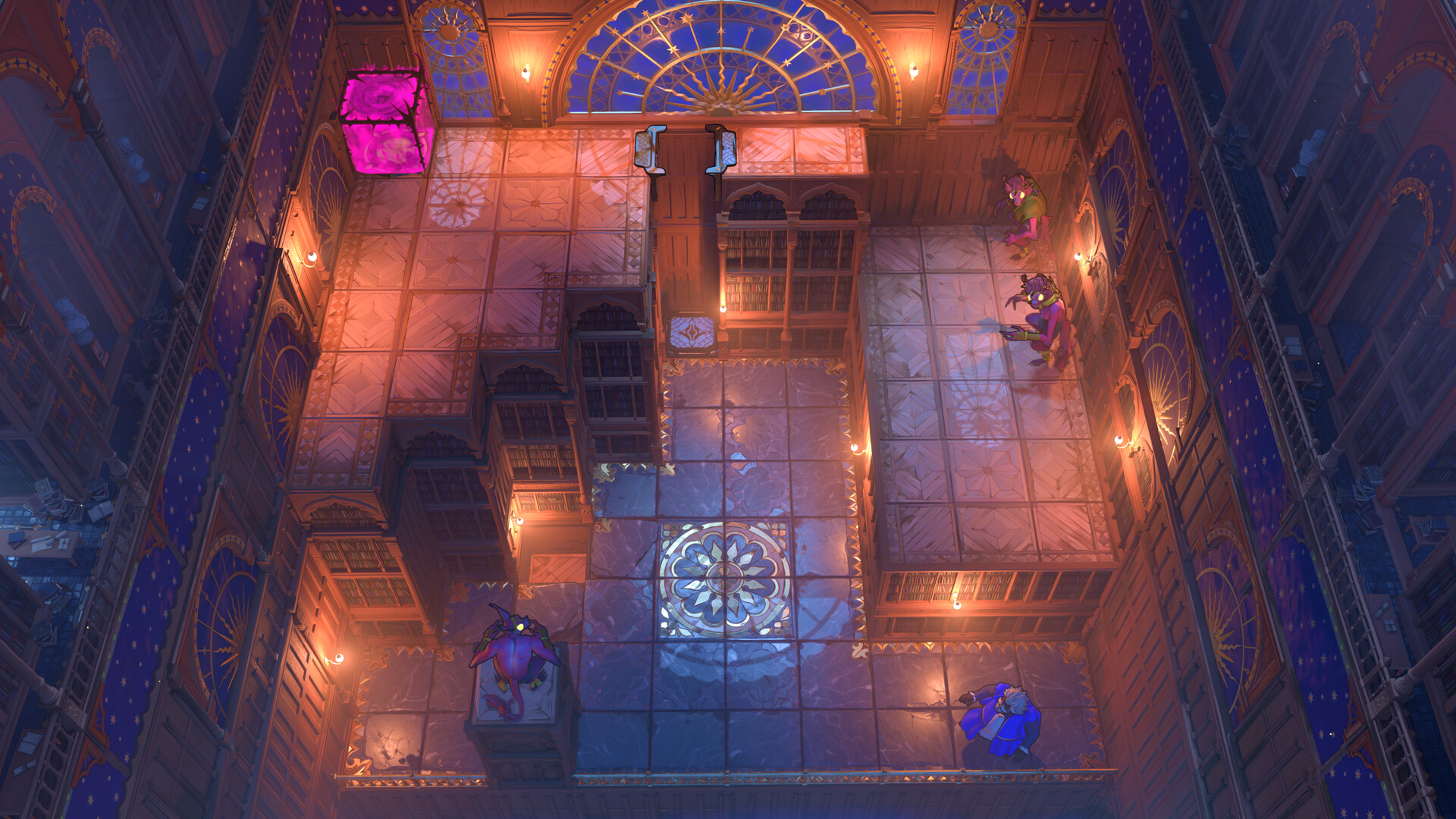
The southern region comes from a game about skipping stones across water, where the act of bouncing an object is the mechanism for building paths and diverting currents. The northern and eastern regions are about where things can go; the southern region is about what the medium itself will allow.
Water in this region is not simply an obstacle to be bridged. Stones that skip across it create temporary routes, redirect flows, and interact with the floating pads that can be pushed around like any other object. The puzzles here are the most physically intuitive in the game and the most likely to produce the sensation of having built something.
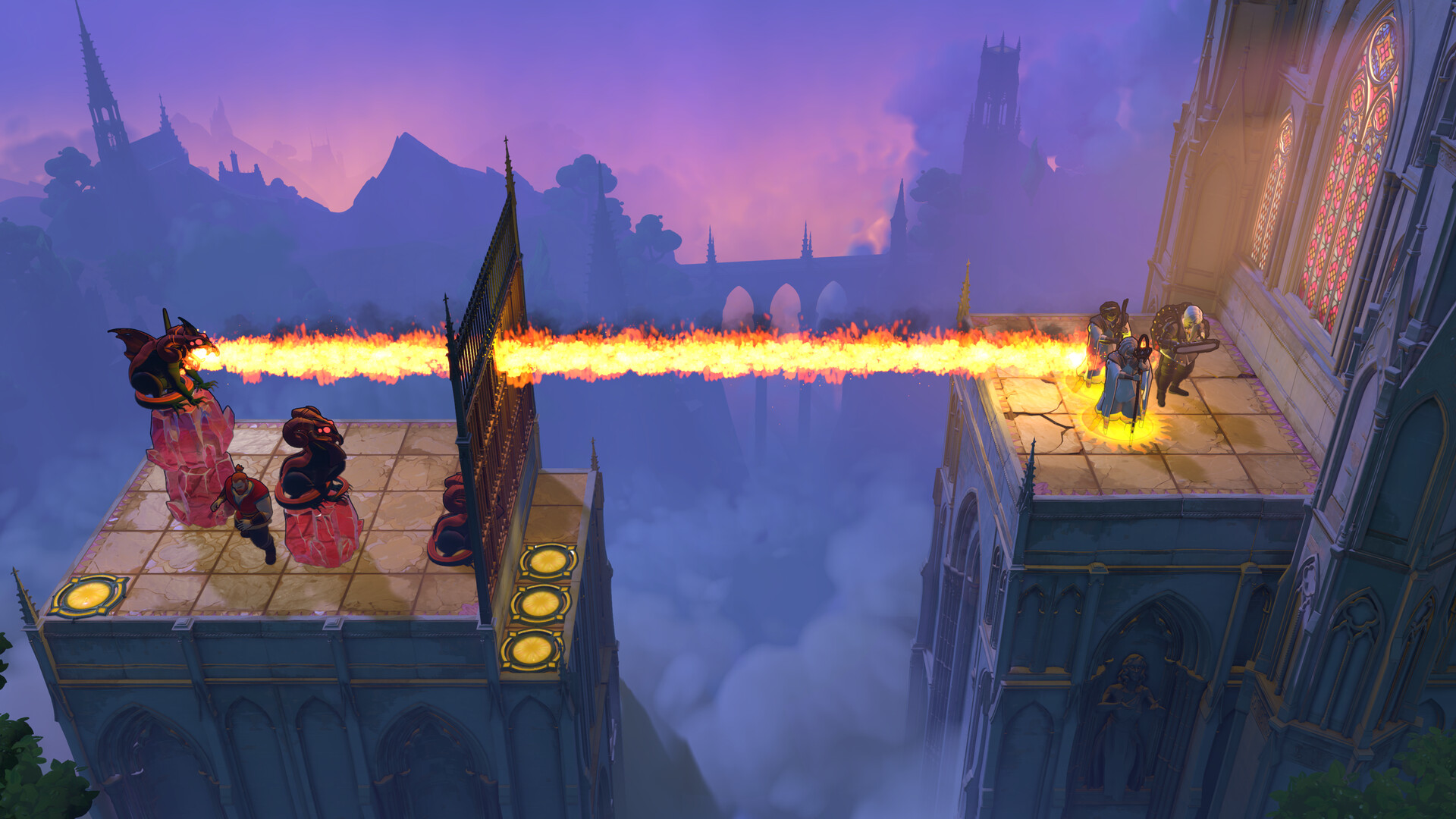
The western region completes the set with beams that let characters walk through walls, teleport across a level, and destroy objects. Where the other three regions are about movement and position, this one is about permission — what the rules will let you pass through, and what they will let you remove.
05 · DESIGN
Why Borrowing Works Here
It would be easy to read the structure as a set of homages, and it is not that. The distinction matters. An homage reproduces a thing; this game takes the rules of a thing and then asks what happens when those rules are made to share a board with rules that were written for a different game entirely.
That is why the regions are described by the developers as expansions rather than references. Each one is a fuller, harder, more inventive version of its source, and each one is designed to be understood in isolation before the collisions begin.
The result is a game whose variety comes from its structure rather than from its assets. There is one grid, one verb, and one camera. Everything else — the four worlds, the four systems, the enormous number of puzzles — is produced by taking complete ideas and putting them next to each other.
06 · DESIGN
The Point of the Collision
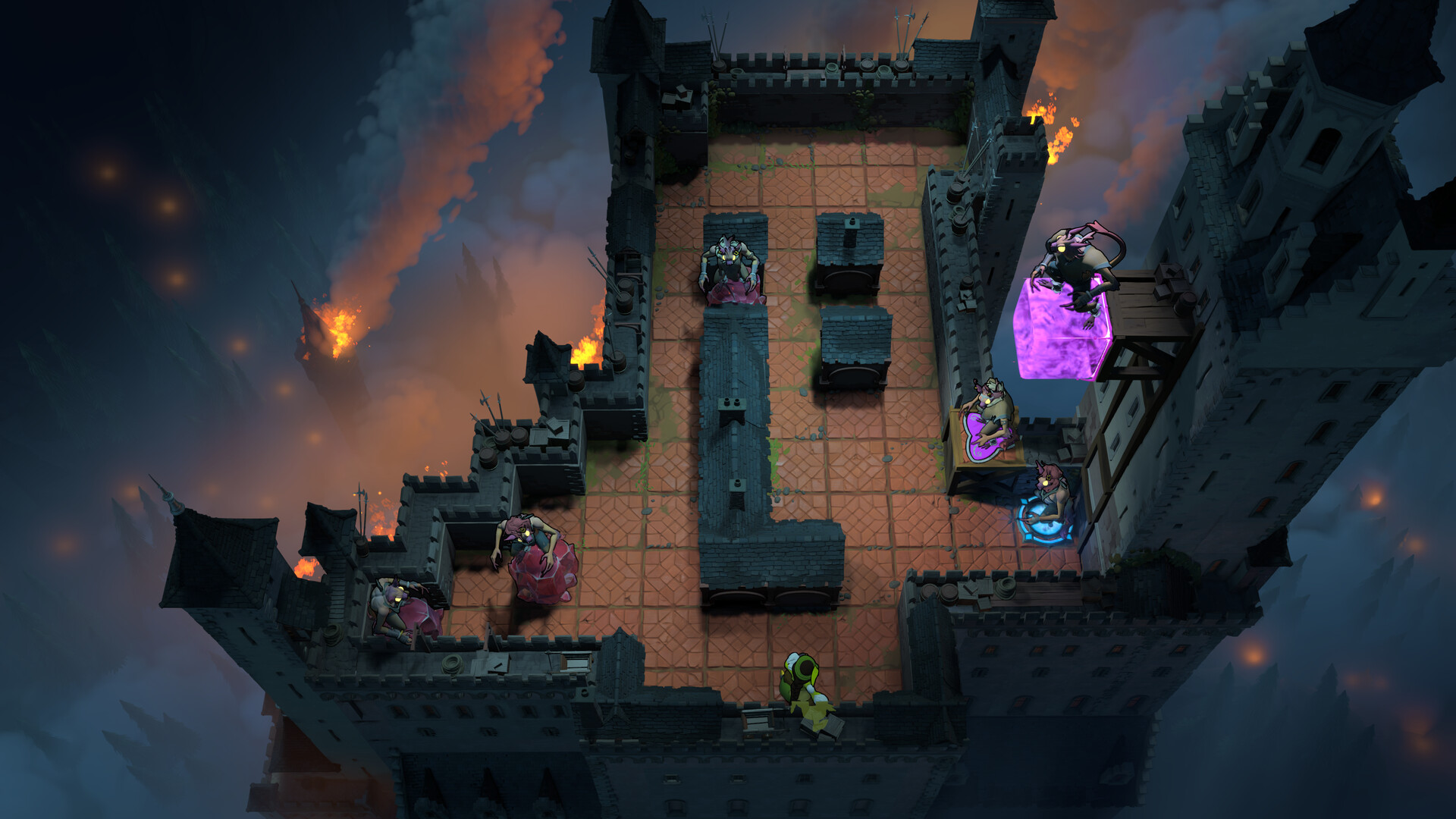
The four sources explain the game's shape, but they do not explain its difficulty. That comes from the meeting points, where a puzzle requires a mirror and a skipping stone, or a teleporting character and a fire hazard, and the solution is not contained in either system on its own.
These are the moments the design is built toward. Each region teaches a complete vocabulary; the overworld then hands the player rooms that require two vocabularies at once, and the game's reputation for depth comes almost entirely from those rooms.
It is a structure that could only work if the borrowed rules were genuinely simple, and they are. Four small games, each with one good idea, arranged so that the good ideas can be made to argue with each other — that is the whole of Order of the Sinking Star, and it is more than enough.
“The regions were never meant to stand alone. They were meant to collide.”