DISPATCHES / CRITIQUE / 11 MIN READ
The Cost of Enormity
Order of the Sinking Star is built from more than a thousand puzzles across four interlocking worlds. The same scale that makes it generous is also the thing that most reliably works against it, and the game's sharpest critic spent nearly seventy hours finding out exactly where that line falls.
01 · CRITIQUE
A Thousand Puzzles, One Idea
A good puzzle game has to keep finding new ways to test you. It has to teach a skill, reward close observation, and arrive at answers that make logical sense without being either obvious or needlessly obscure. On those terms Order of the Sinking Star largely delivers, and it does so with puzzle design that is by turns cunning, devious and impressively tight.
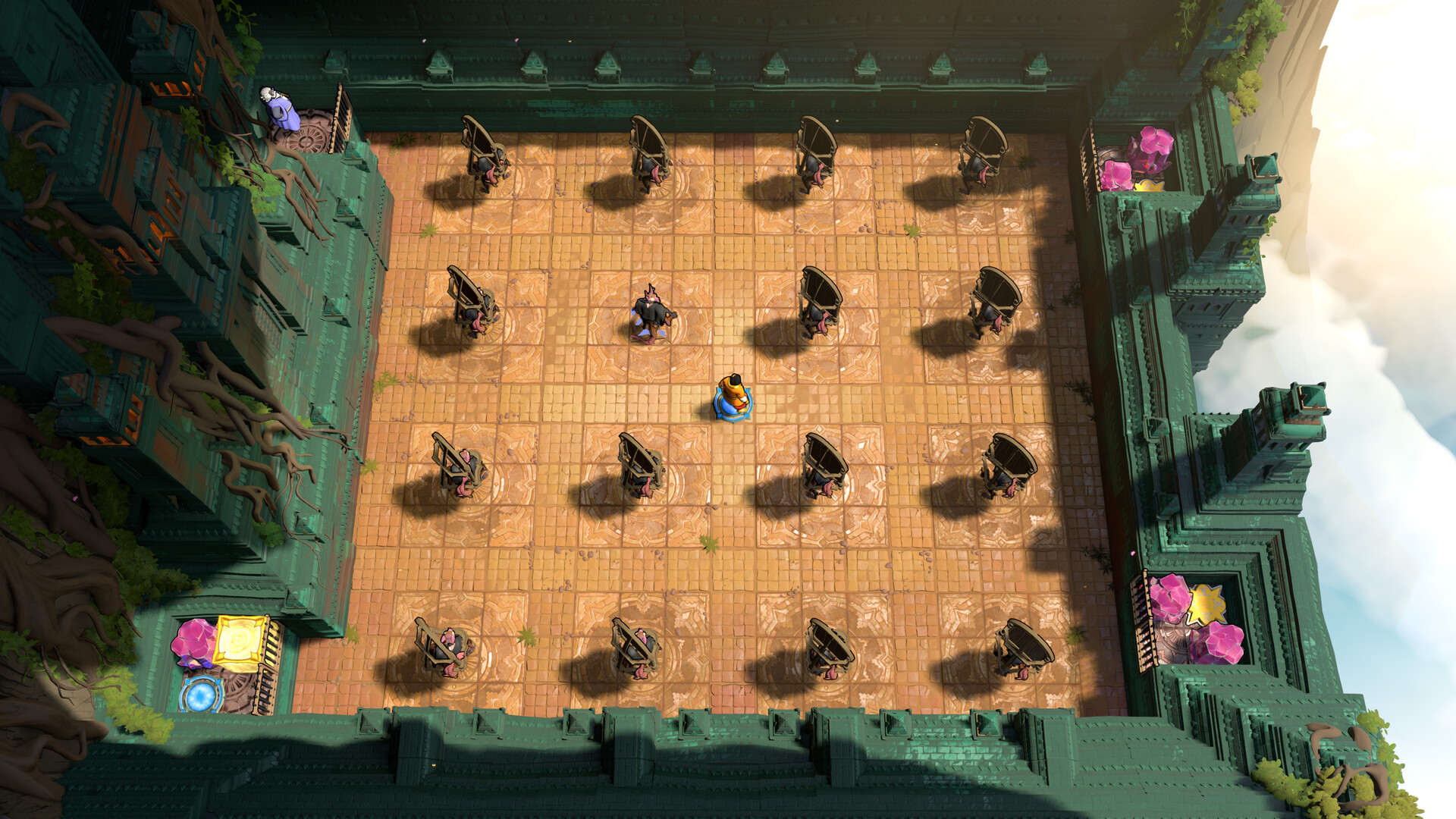
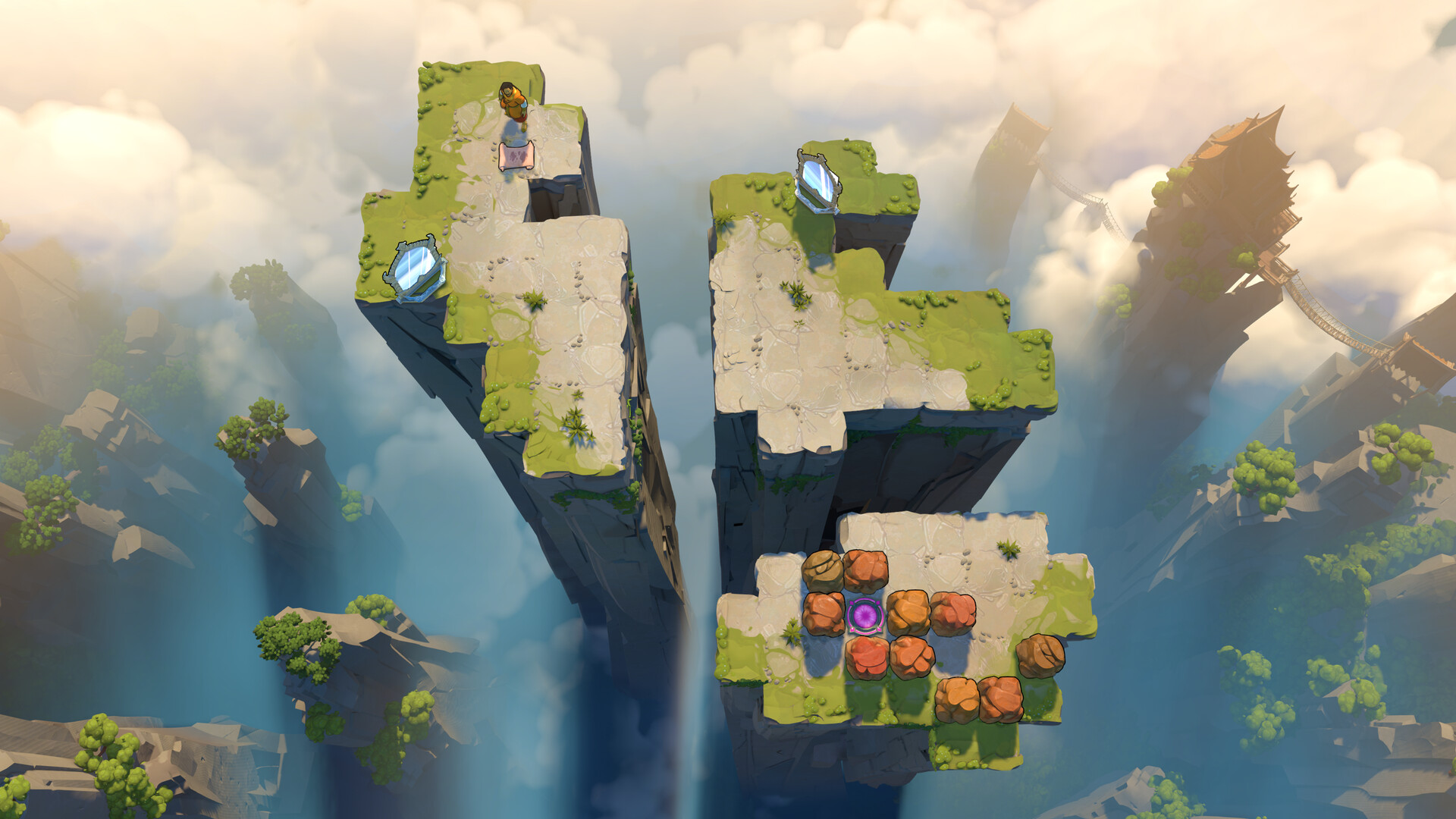
The scale is the first thing anyone notices, and it is the studio's own headline number: more than a thousand puzzles, spread across an overworld map full of discrete, dungeon-like levels. The structure borrows openly from the 1987 Legend of Zelda — a top-down grid, a map that opens up as you clear its points, and the same simple verb underneath everything. You push blocks. That is the whole of it, and keeping that single act interesting for hundreds of puzzles is the game's greatest achievement.
It is also where the trouble starts. Ingenuity on this scale produces sprawl, and sprawl produces the occasional stretch of a game that is genuinely unwieldy. The puzzles are not hard because the verb is complicated; they are hard because of how many intricate mechanics the game stacks on top of a concept that a child could describe.
02 · CRITIQUE
Four Worlds, Four Systems
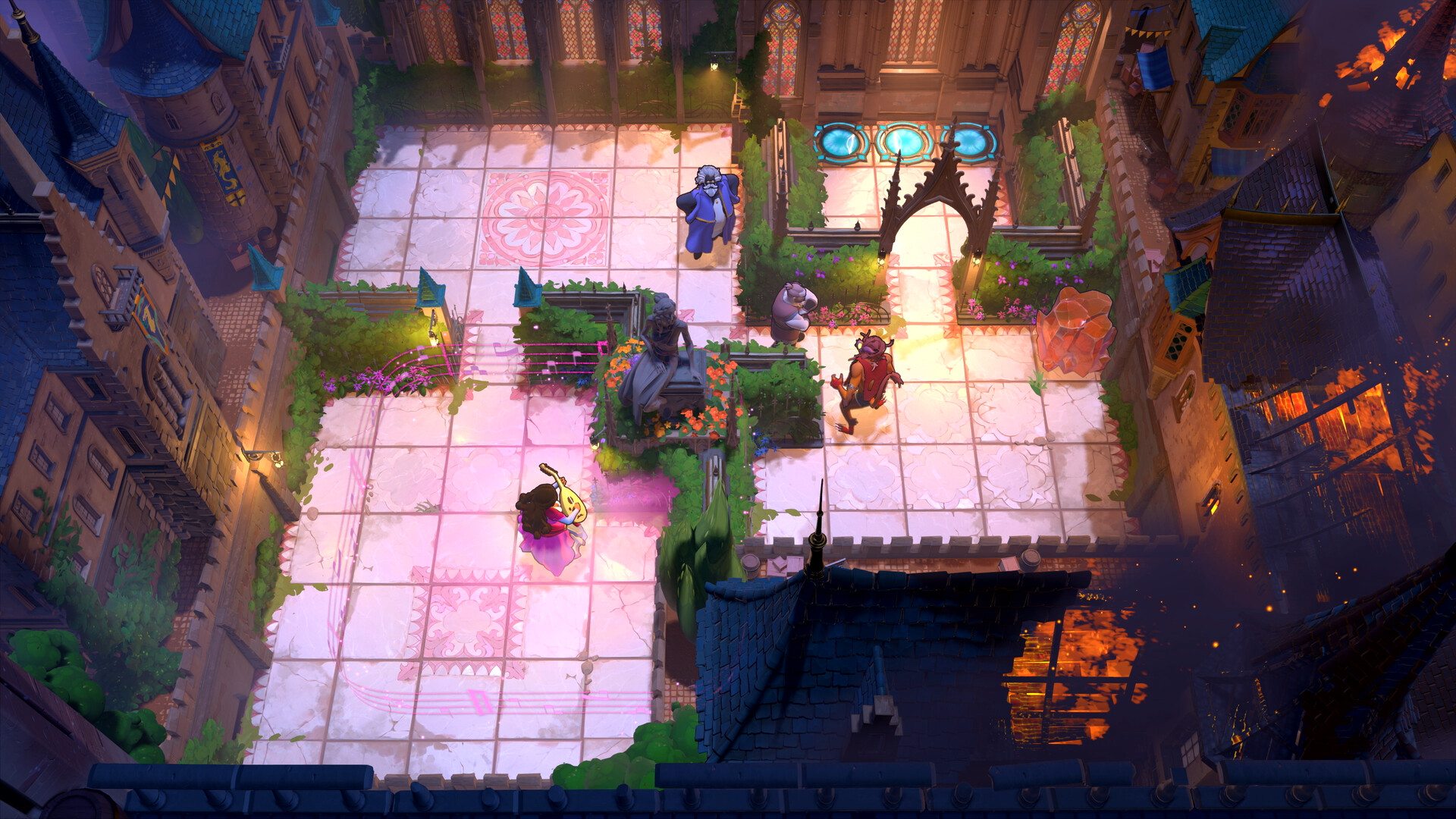
You begin in what reads as a strange artificial garden, controlling a character who has just been pulled out of some kind of battle and who wonders, reasonably, whether she has died. Audio logs left by an earlier explorer establish that someone came this way before you and recorded what he found. From there the map opens in four directions, and each direction is a different set of rules.
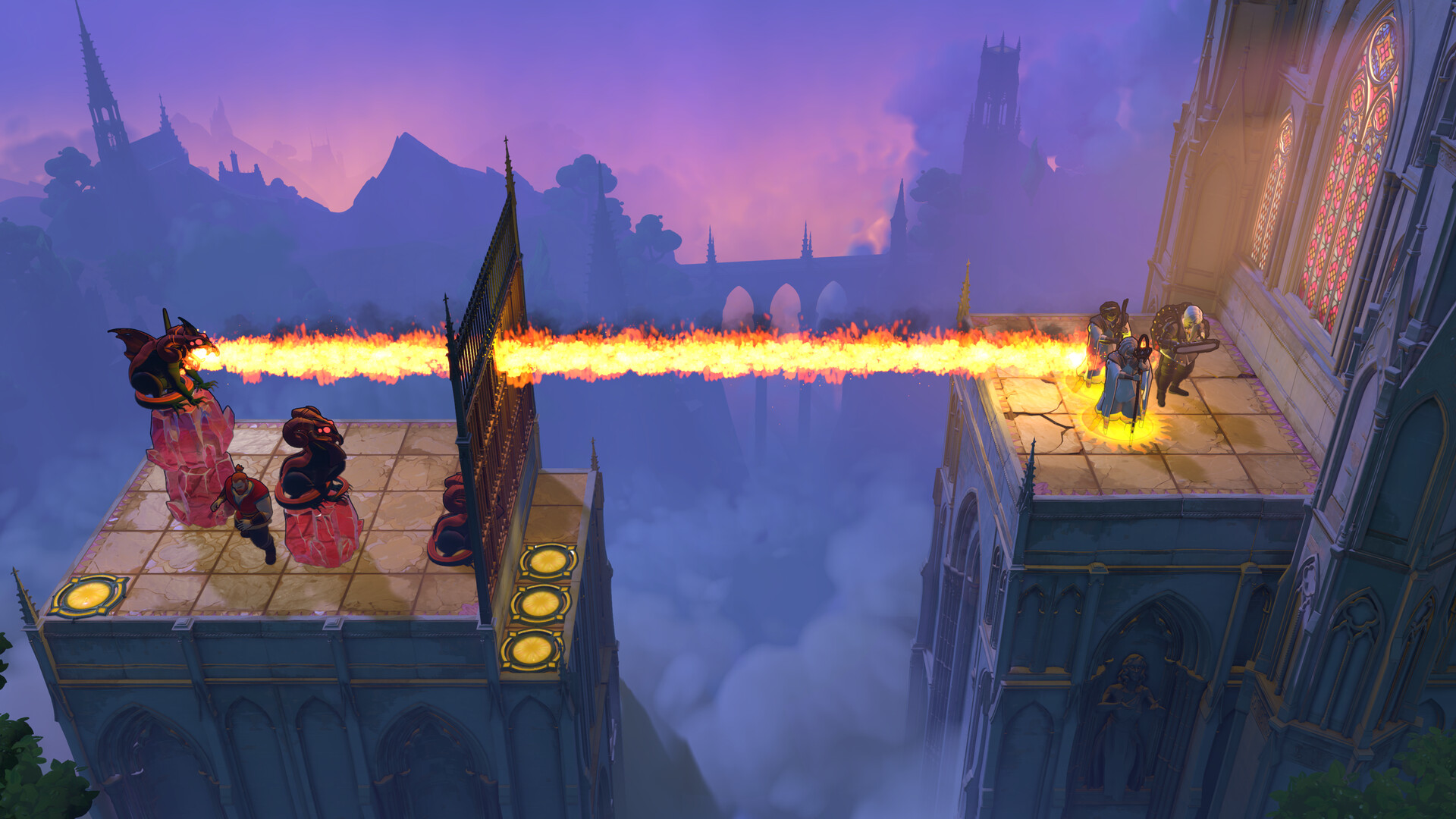
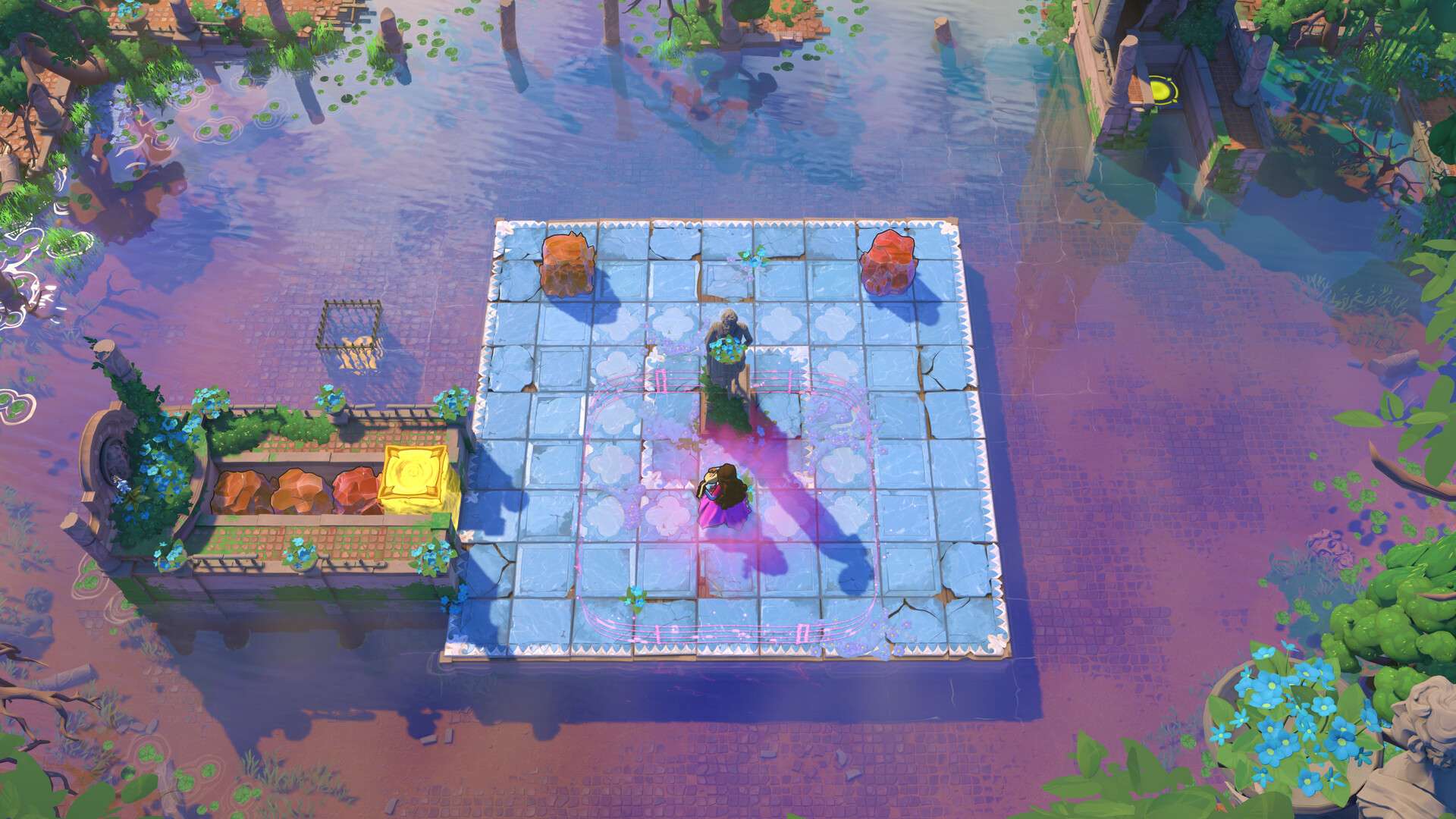
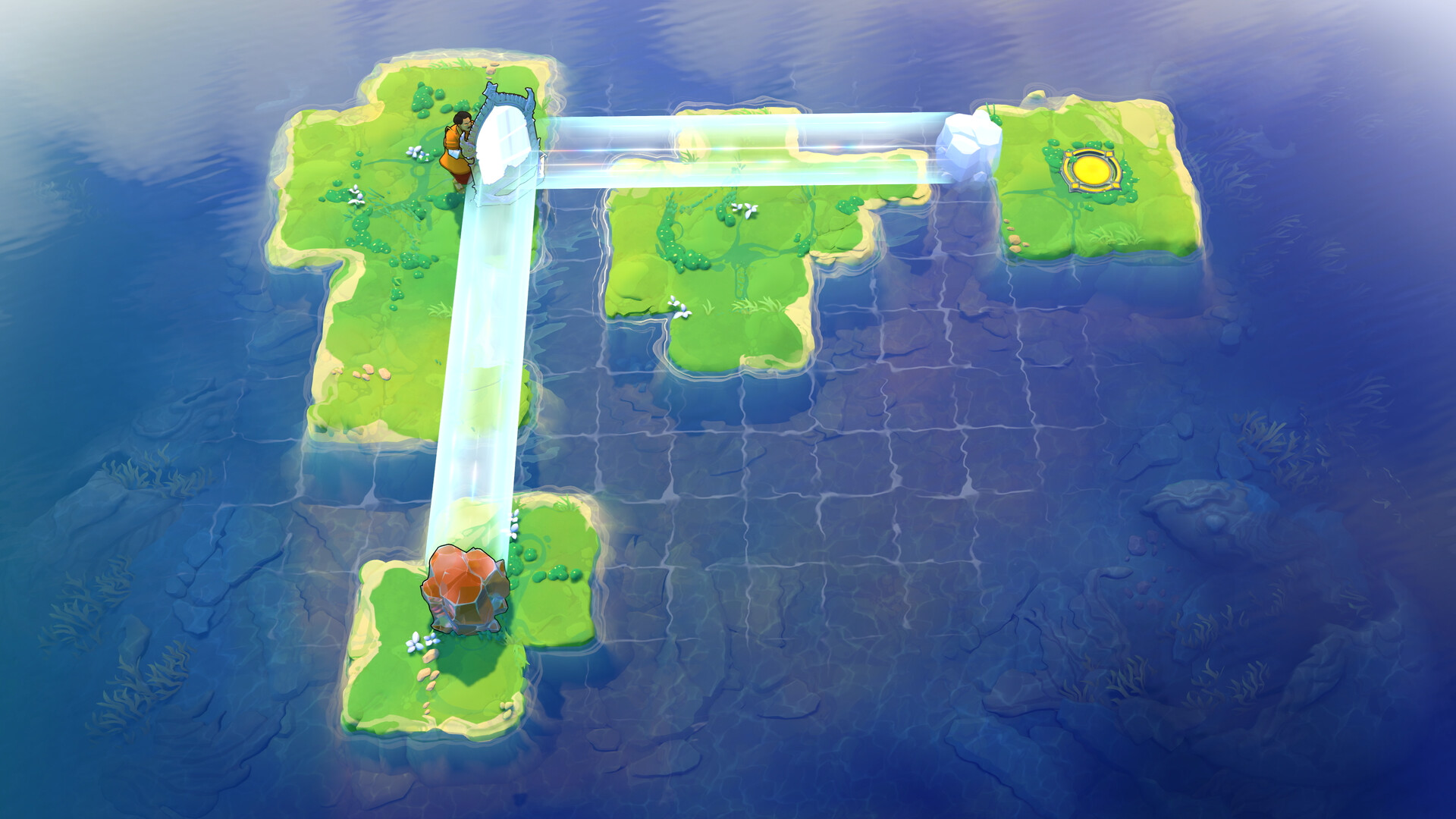
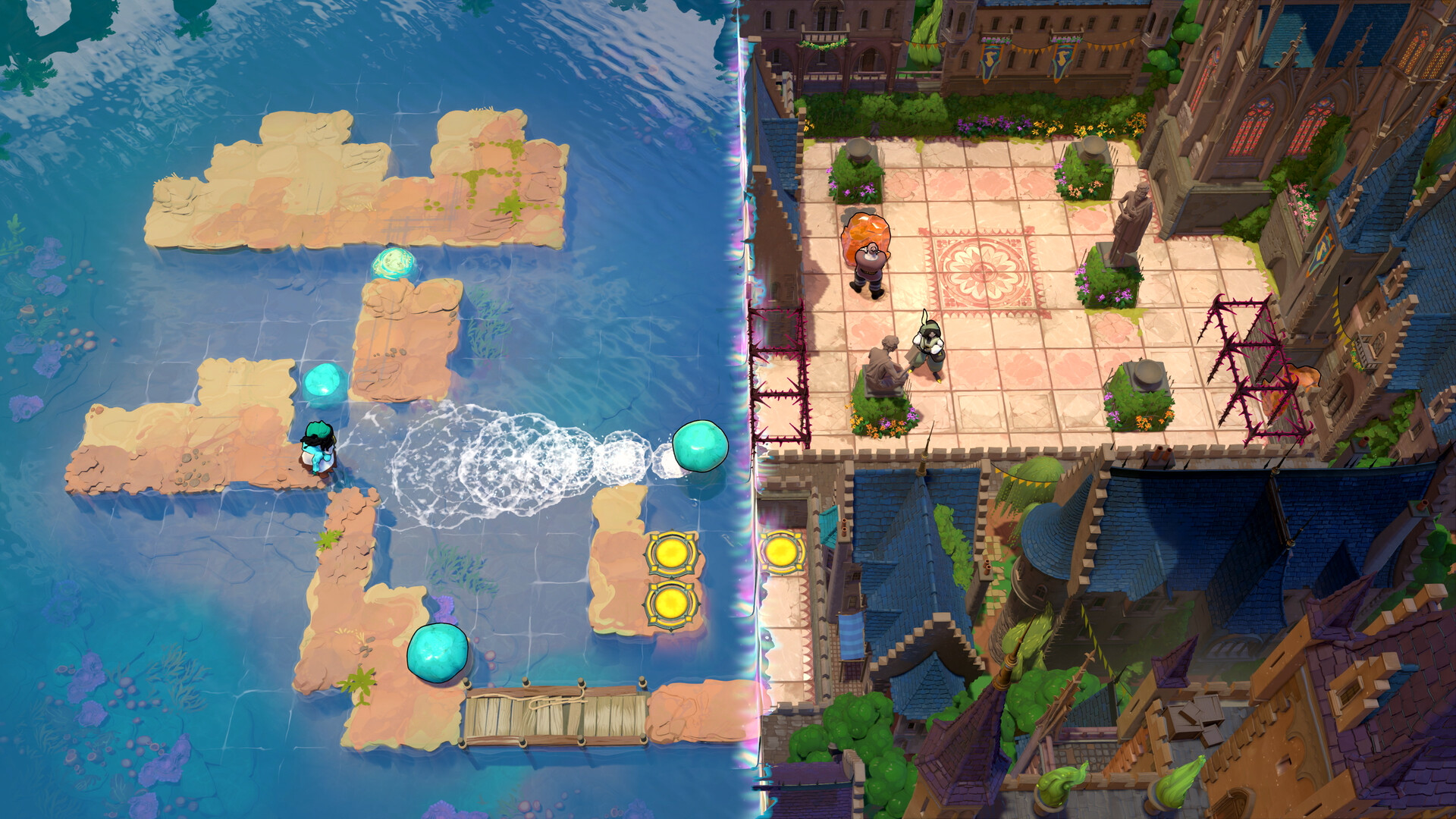
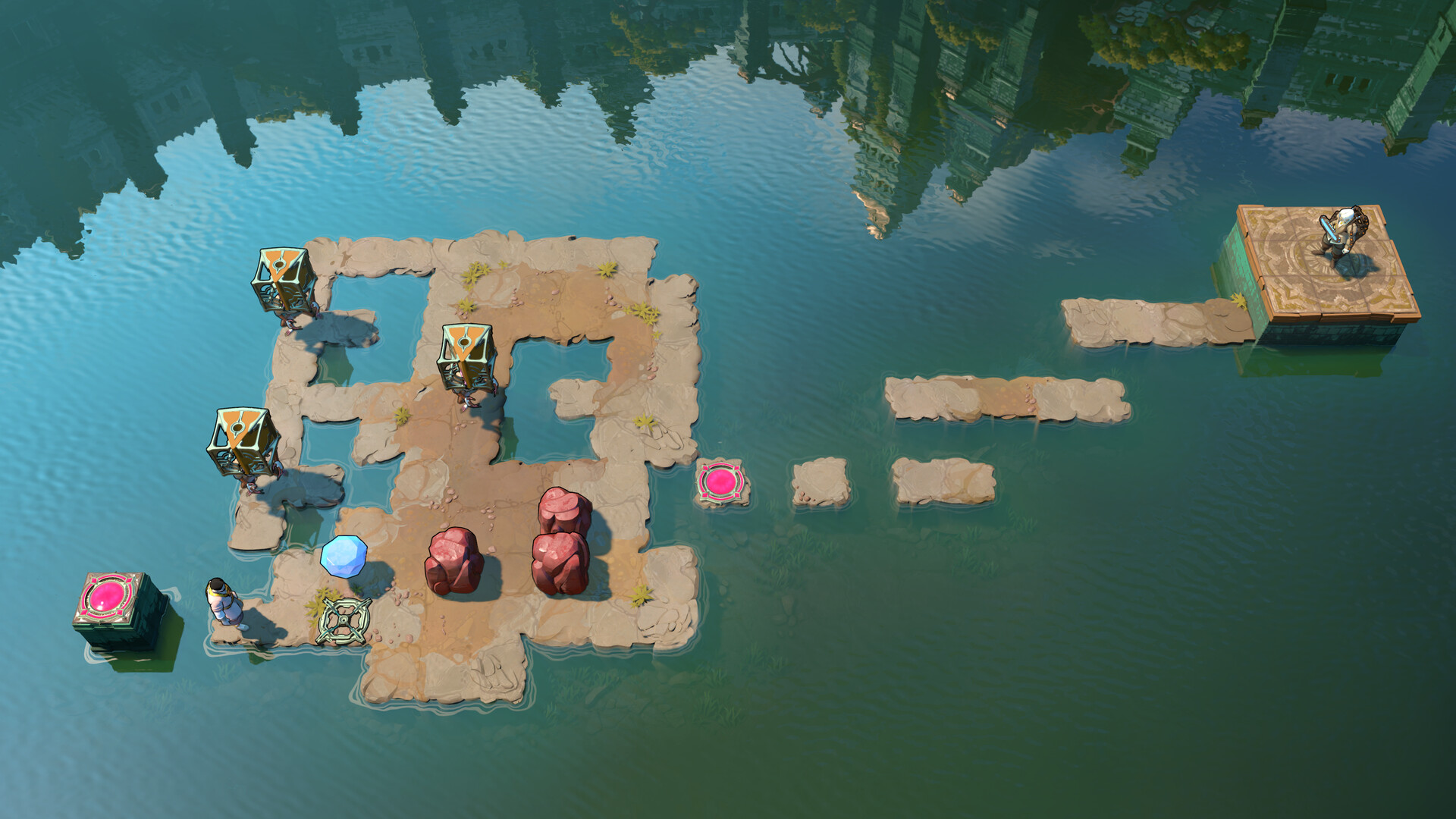
The four regions are each inspired by a smaller, earlier puzzle game, and the designers of those originals served as level designers for the regions they inspired. The north follows a Sokoban-style tradition and staffs itself with role-playing archetypes: a warrior who can shove several blocks at once rather than one, a mage who swaps places with whatever he faces, a thief who cannot push at all but drags objects along behind her. The east takes its rules from a game about mirrors that teleport objects at right angles. The south turns on skipping stones, which cross water to build pathways and divert currents. The west builds on beams that let characters walk through walls, teleport across a level, and destroy what stands in their way.
Read as expansions of their source material, all four regions work. They also present a genuinely wide array of ways to think, partly because of the characters you steer through them. Some cannot push anything but can transform objects or carry them in a pocket; one wears a contraption so bulky that he needs empty space simply to turn around, which forces you to plan his movement differently from everyone else's.
03 · CRITIQUE
When the Rules Outnumber the Player
The game is at its best when it pushes you toward creative thinking by combining its systems. It teaches new concepts that build on old ones in ways that feel mostly intuitive, and it produces a steady supply of aha moments — the instant you understand what a level is trying to show you, and then make the leap that follows.
One level brought together a teleporting beam and the mirrors, which under the right conditions can produce copies of your character that all have to be controlled at once. The player quickly found himself managing four copies. The level had a single exit, only one character could use it, and characters cannot be killed and still leave you able to finish. So the copies had to be fused back into one, without the mirrors. Working that out changed how every element in the game seemed to relate to every other, and opened lines of thinking that had not occurred before.
The cost of combining four games' worth of good ideas is that you have to hold all of them in your head at once, and the deeper you go the heavier that load becomes. A handful of puzzles cram in so much that their difficulty comes from overwhelming you with rules rather than from expanding your thinking. There were stretches of minutes, and once hours, spent staring at a board only to find that the answer turned on some simple but obscure interaction of rules that had been forgotten because there were so many to remember. In one such puzzle the solution had already been found — the time went into re-deriving a rule about the skipping stones that had been learned hours earlier and misremembered since.
That is the honest shape of the criticism: the mechanics can work against the player, and the game can seem enormous for the sake of being enormous. What saves it is the same scale that causes the problem. Because there is always somewhere else to go, being stuck is rarely a dead end; you wander off and make headway on something else instead.
04 · CRITIQUE
A Story That Stays Out of the Way
The plot is the thinnest part of the package. The narrative elements meant to supply an overarching drive to explore turn out to be slight, at least across the many tens of hours spent with the game. Each character arrives with a personality, an agenda and a set of motivations, and each is waylaid by stumbling into the same strange puzzle world — but the fragments of story doled out along the way are rarely satisfying.
The party from the north is chasing a magistrate who never becomes more than a disembodied voice, when he is present at all. The scavenger from another region wants to collect gems for research and personal profit, and it is never made clear what that would be good for. The mirrors belong to some series of trials that a character failed at in his past. Every story is told in tiny, scattered pieces and reads mostly as a veneer laid over the puzzle ideas, which makes the whole thing more confusing than compelling.
The larger mystery — what this place is, why it exists, who built it — is just as oblique. There are answers, that much is plain, but reaching them demands an investment far beyond what the story returns. Reaching the first of the game's endings yields little but more questions and a great many dangling threads. The motive for carrying on, it becomes clear, has to come from wanting to see what new challenge the designers have waiting, not from wanting to know how the story turns out.
That is a real limitation, and it is worth stating plainly rather than excusing. But it is also a limitation the game survives, because the challenges themselves are frequently enough on their own.
05 · CRITIQUE
The Kindness of an Undo Button
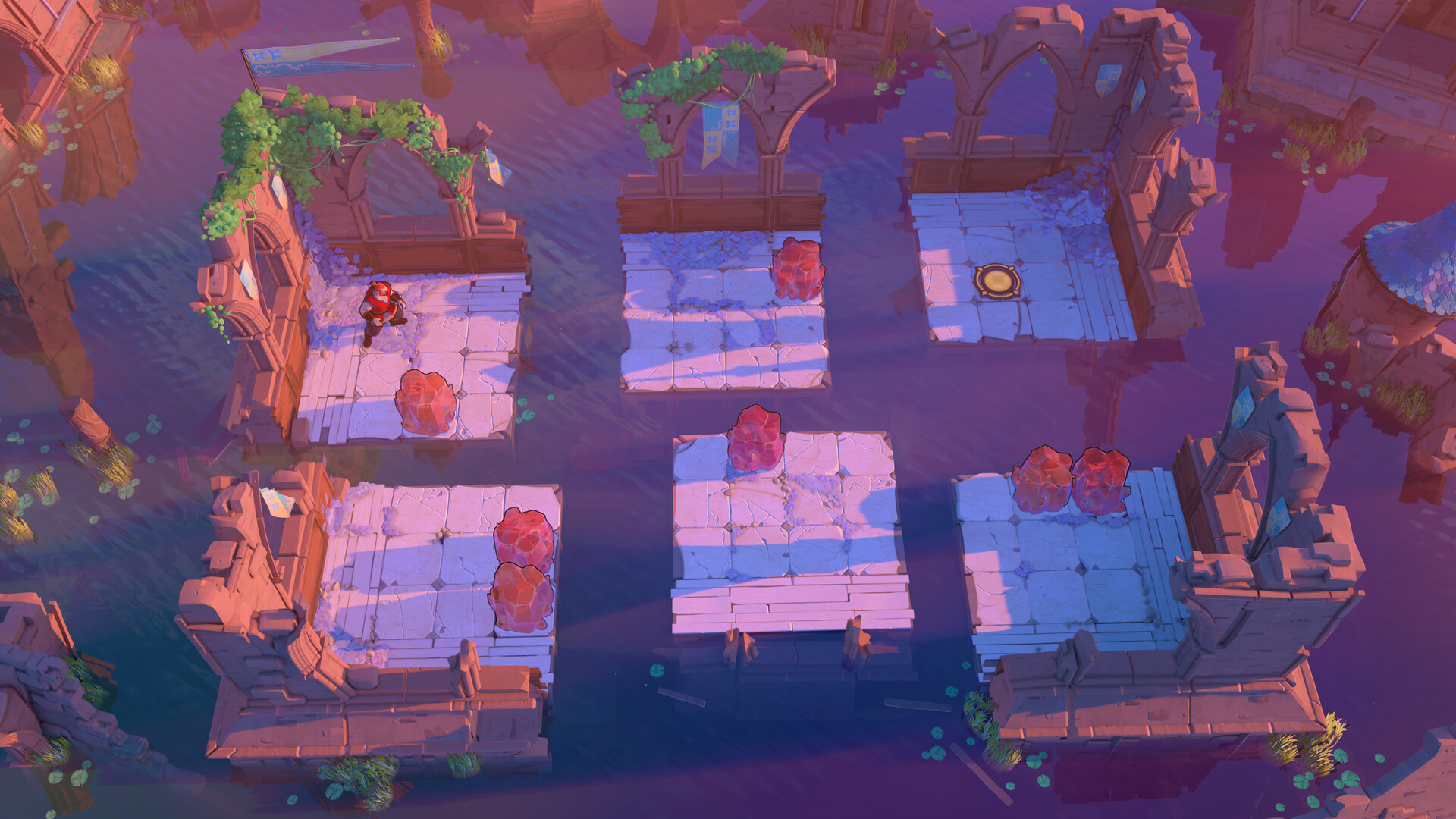
Where the game is unreservedly generous is in how little it punishes experimentation. An instant undo steps you back a single action, and an action is as small as moving one character by one square. Misjudging a shove and sending an essential object off a cliff, or trapping yourself in a corner, costs a button press rather than a restart. A dedicated control restarts a puzzle instantly with no loading screen. Time itself can be slowed or sped up at will, which makes timing-sensitive puzzles tractable and lets you skip the dead stretches when you are waiting for something to happen.
This is the design decision more puzzle games should copy when they can. A forgiving game lets you poke at an idea, test it, and throw it away without charging you for the experiment. Here it is paired with a puzzle set that is genuinely inventive, and the combination is unusually comfortable to spend time inside.
06 · CRITIQUE
The Price of Admission
The verdict that emerges from all of this is not that the game is too big, or that its puzzles are not good enough. It is that the puzzle design is strong, the interactions between systems are inventive, and the sheer volume eventually wears on you — while the narrative that is supposed to hold it together never quite justifies the space it takes up.
The occasional frustration, and the occasional puzzle that buries its idea under too many rules, are the affordable price of admission to play with so many good ideas in one place. The takes on the established mechanics never seem to run out or go stale, and opening a new region built on a fresh reading of something already learned remains the best feeling the game offers. It might have been better if the enormous pile of puzzles had been deployed with a little more curation. It is still a great deal of game, and most of it is worth the time.
“The best and worst part of the game is how expansive it is.”