DISPATCHES / SYSTEMS / 12 MIN READ
How the Party Changes the Puzzle
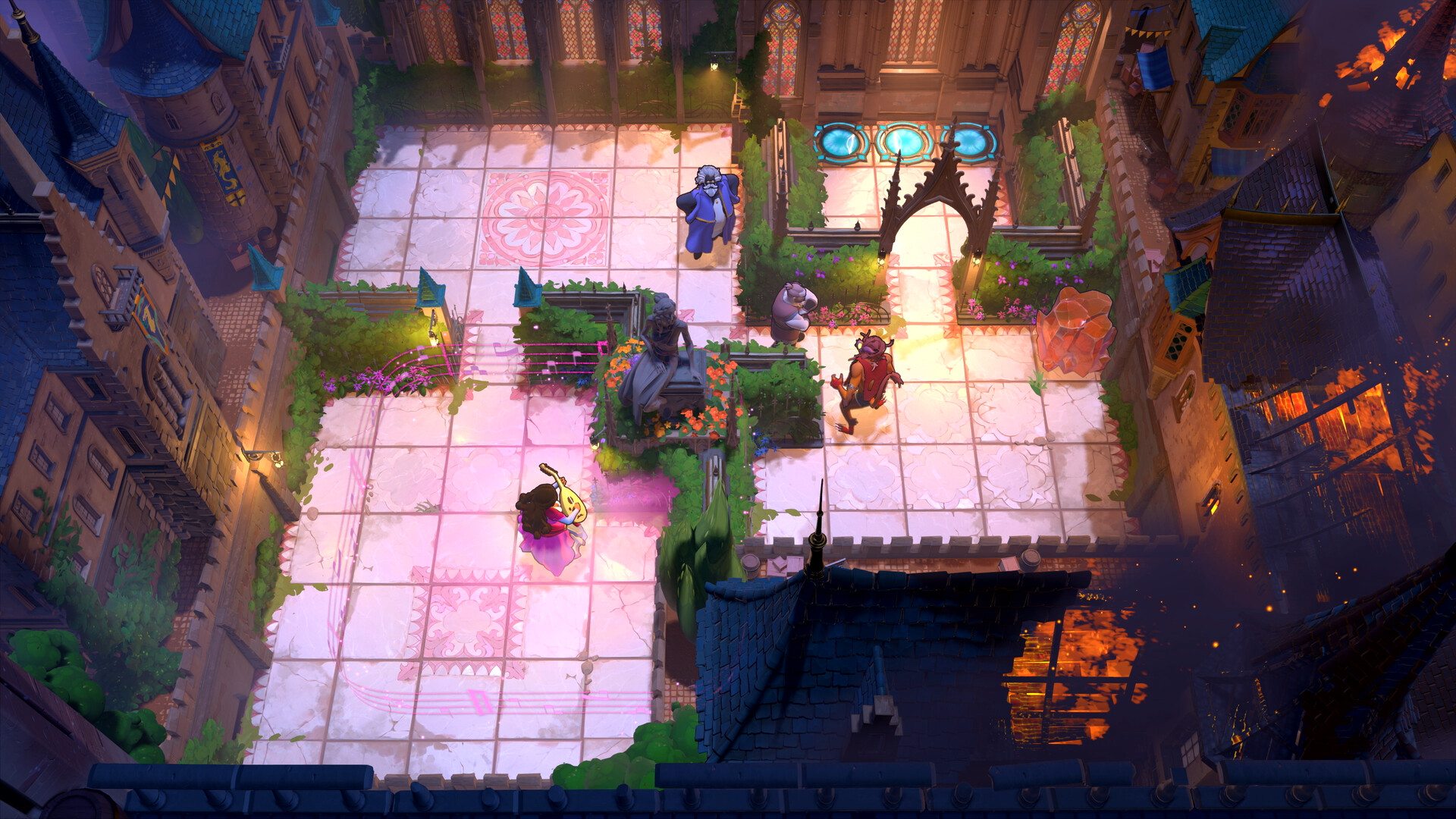
The northern region of Order of the Sinking Star does not introduce new blocks or new terrain. It introduces people. Four characters with four sets of rules turn the same grid into a different game each time, and the region's real subject is what happens when you have to solve with all of them at once.
01 · SYSTEMS
One Grid, Four Sets of Rules
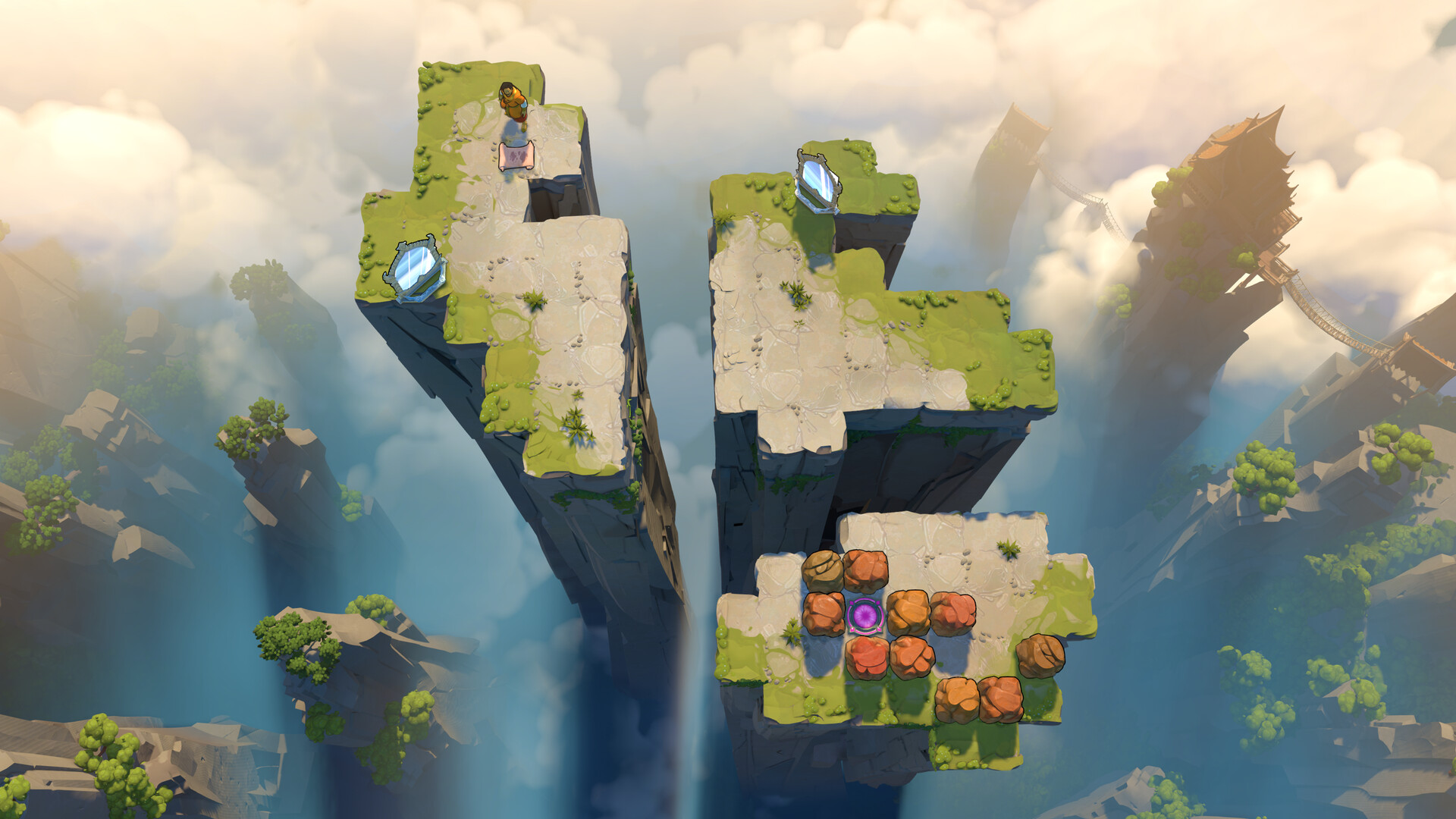
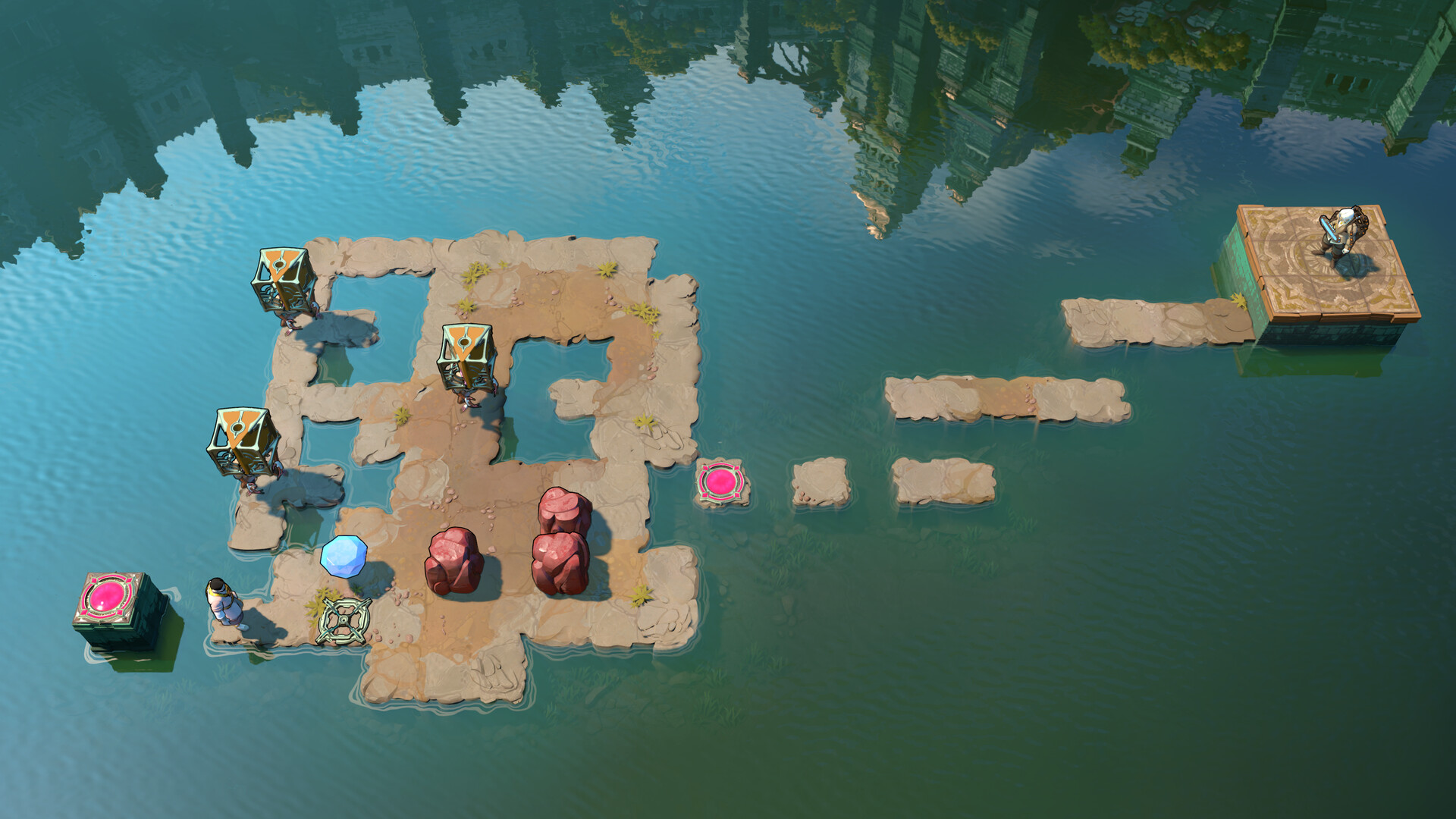
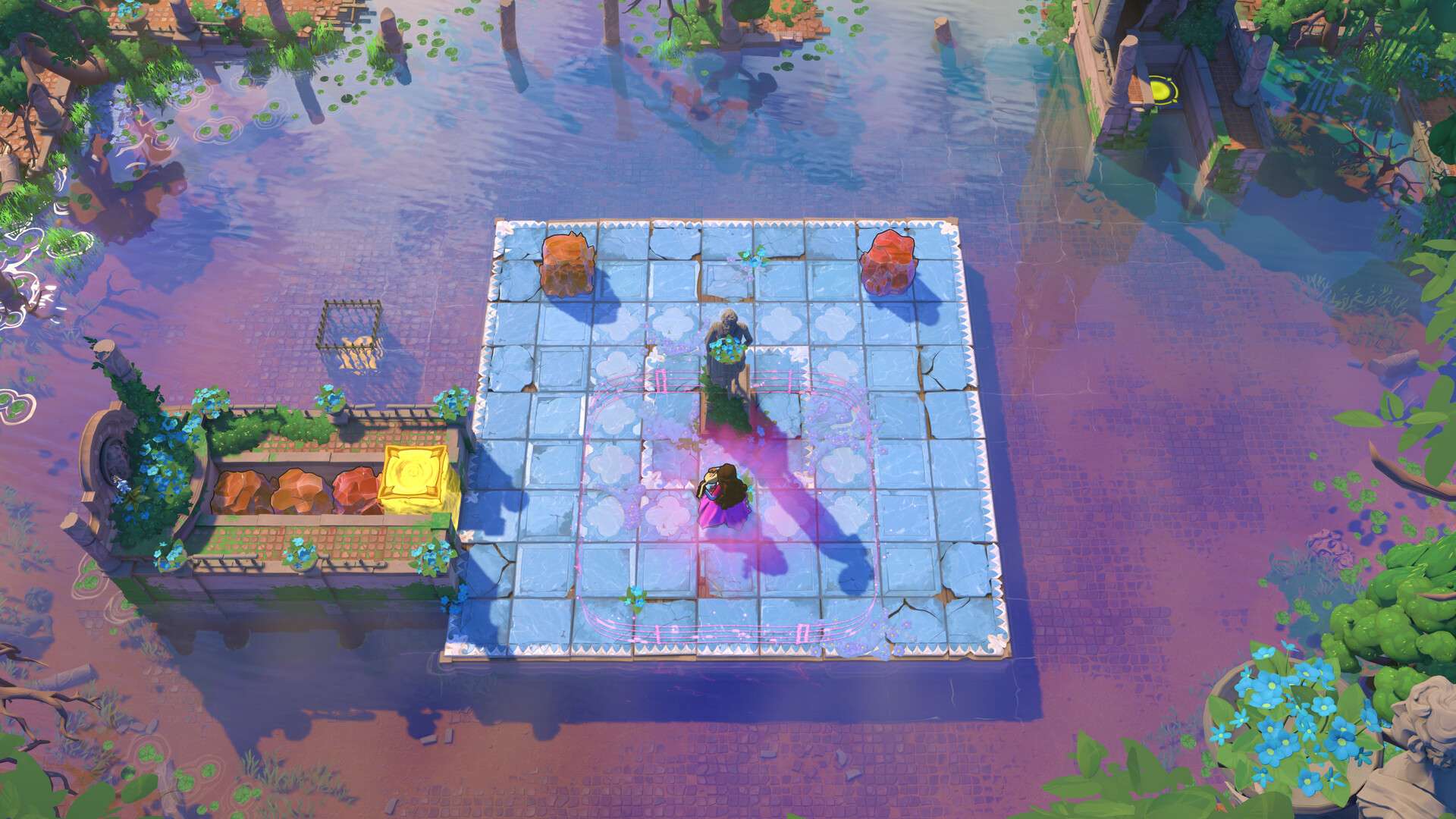
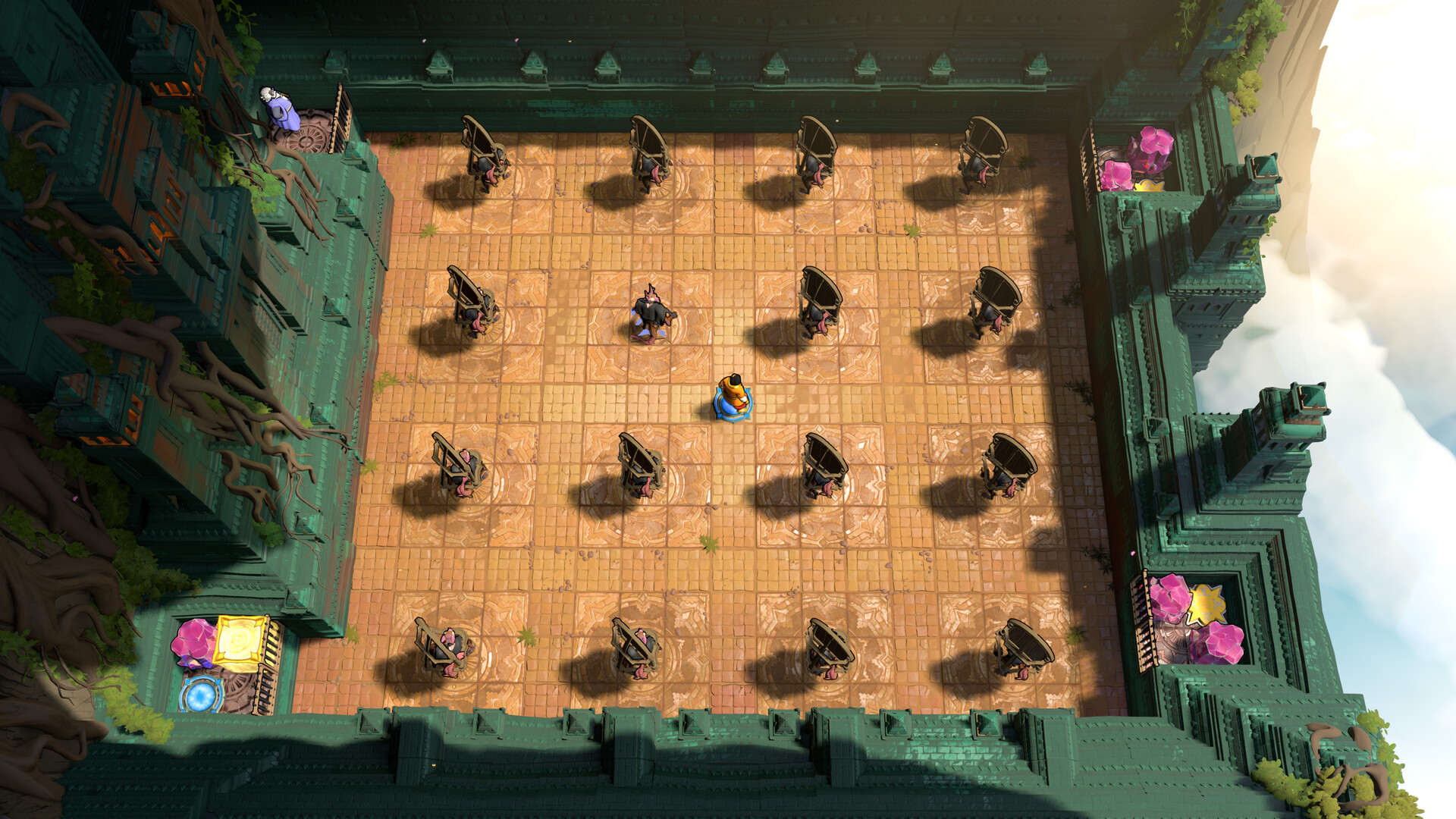
The party region is built on a simple premise that turns out to have enormous reach: rather than adding new kinds of obstacles, it adds new kinds of movers. The board stays the same. The crystals, buttons, gates and water stay the same. What changes is who you are controlling and what that character is physically capable of doing to the objects around them.
The default figure in most of the game pushes one block at a time, and everything else is defined against that baseline. The strongman pushes several at once, which sounds like a straightforward upgrade until you meet a puzzle where moving three things together is exactly the wrong outcome. The thief cannot push at all and instead drags whatever she stands beside, and — crucially — she does it automatically. If a pull is possible, it happens, whether or not the player wanted it to. The mage swaps places with whatever he is facing, which converts line of sight into a resource. The fourth figure teleports whenever he looks at a crystal, which means the direction he is facing is itself a move.
None of these abilities is complicated on its own. The complexity arrives when the region begins requiring two of them at once.
02 · SYSTEMS
The Thief and the Problem of Automatic Behaviour
The thief is the clearest example of how much a single rule can change. Her pull is not an action the player chooses; it is a consequence of standing in the wrong place. Walking past a crystal that is adjacent to her drags it along, which means the ordinary business of getting from one side of a room to the other becomes a planning problem.
The way out is to treat her movement as the puzzle rather than as the means of solving it. Stepping sideways breaks the pull, so a player learns to approach a crystal from an angle, take it exactly as far as it needs to go, and then step off the line before continuing. What looks like an awkward control quirk becomes, in the hands of a puzzle built around it, a genuine mechanic with its own grammar.
It is also the ability that produces the region's nastier failures. A pull that happens by accident can undo a setup that took several moves to build, and the game's undo system — one action, one button — becomes the thing that makes experimenting with her tolerable at all.
03 · SYSTEMS
Sightlines as a Resource
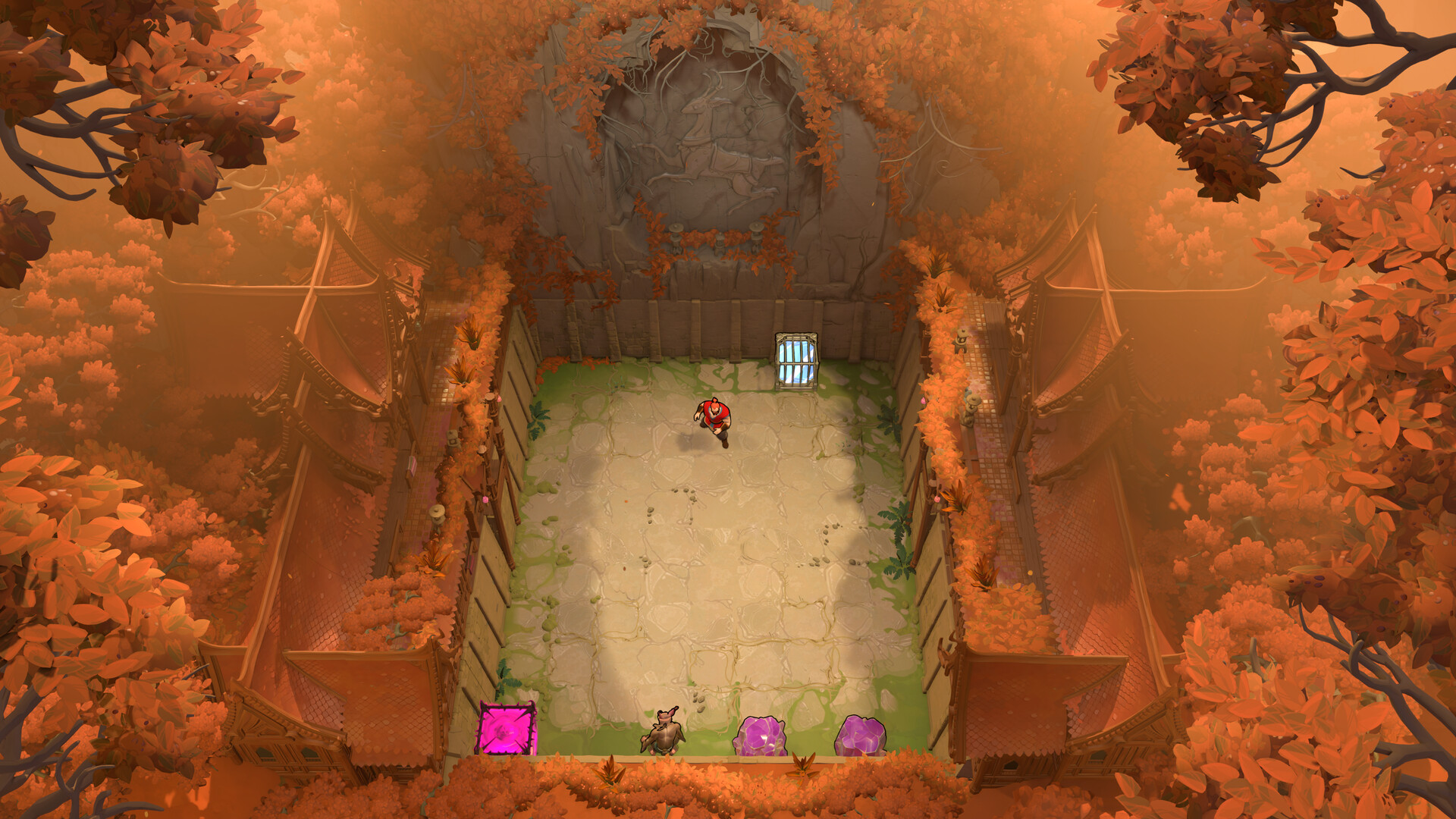
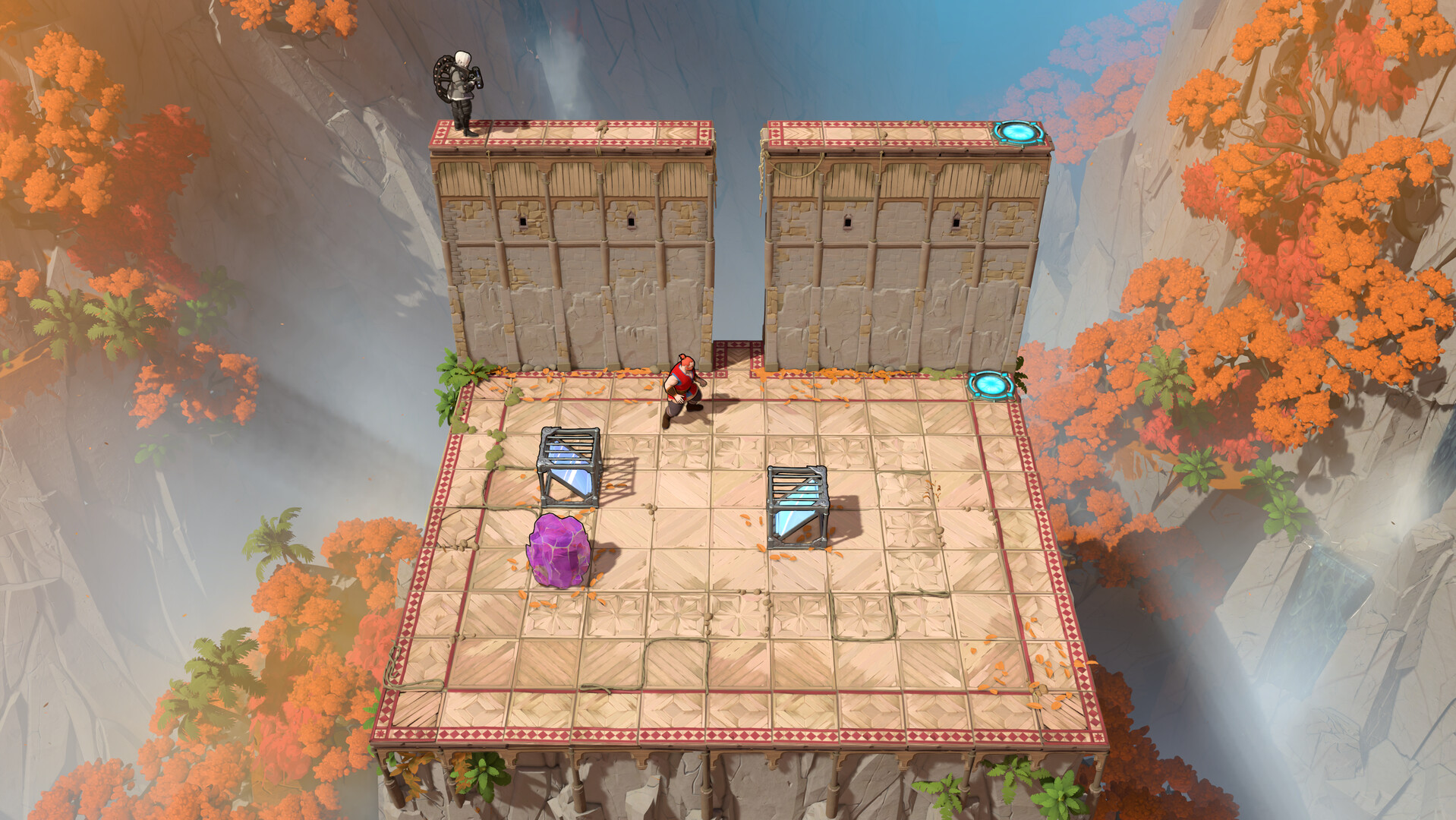
The teleporting figure introduces a different kind of constraint, because his ability is triggered by what he can see rather than by what he does. Any crystal in his line of sight is a potential swap, so the position of unrelated objects on the board suddenly matters.
That turns blocking into a mechanic. A crystal parked between him and something he should not teleport into is not an obstacle but a tool, and puzzles in the region are built around arranging objects specifically to control what he is looking at. The mage operates on the same logic from the other direction: he swaps with whatever he faces, so where he stands and where he looks are the two decisions that define every move.
The effect is that the board acquires a layer that is invisible in the visual design. Two otherwise identical arrangements of blocks can be completely different puzzles depending on which way a character is pointed, and the game trusts the player to hold that in mind without ever drawing it on screen.
04 · SYSTEMS
Where the Region Gets Hard
The party region escalates by combination. The early rooms isolate a single ability and teach it. The middle rooms pair two characters and require their abilities to interact — a strongman holding a button while a thief retrieves something he cannot reach, or a mage swapping a figure out of a corner that the thief's automatic pull would otherwise trap.
The late rooms hand over all of the party at once, and this is where the region's reputation comes from. Holding three or four sets of rules in mind simultaneously is a genuinely different kind of load from solving a single dense puzzle, because the difficulty is not in any one interaction but in tracking which character's rule is currently in play.
The design is careful about where it applies that pressure. Puzzle rooms are separated by overworld travel, and the game rarely requires a long chain of correctly remembered rules across several screens. When it does, the undo button and the instant restart are doing more work than they appear to.
05 · SYSTEMS
Enemies, Flames and Unusual Solutions
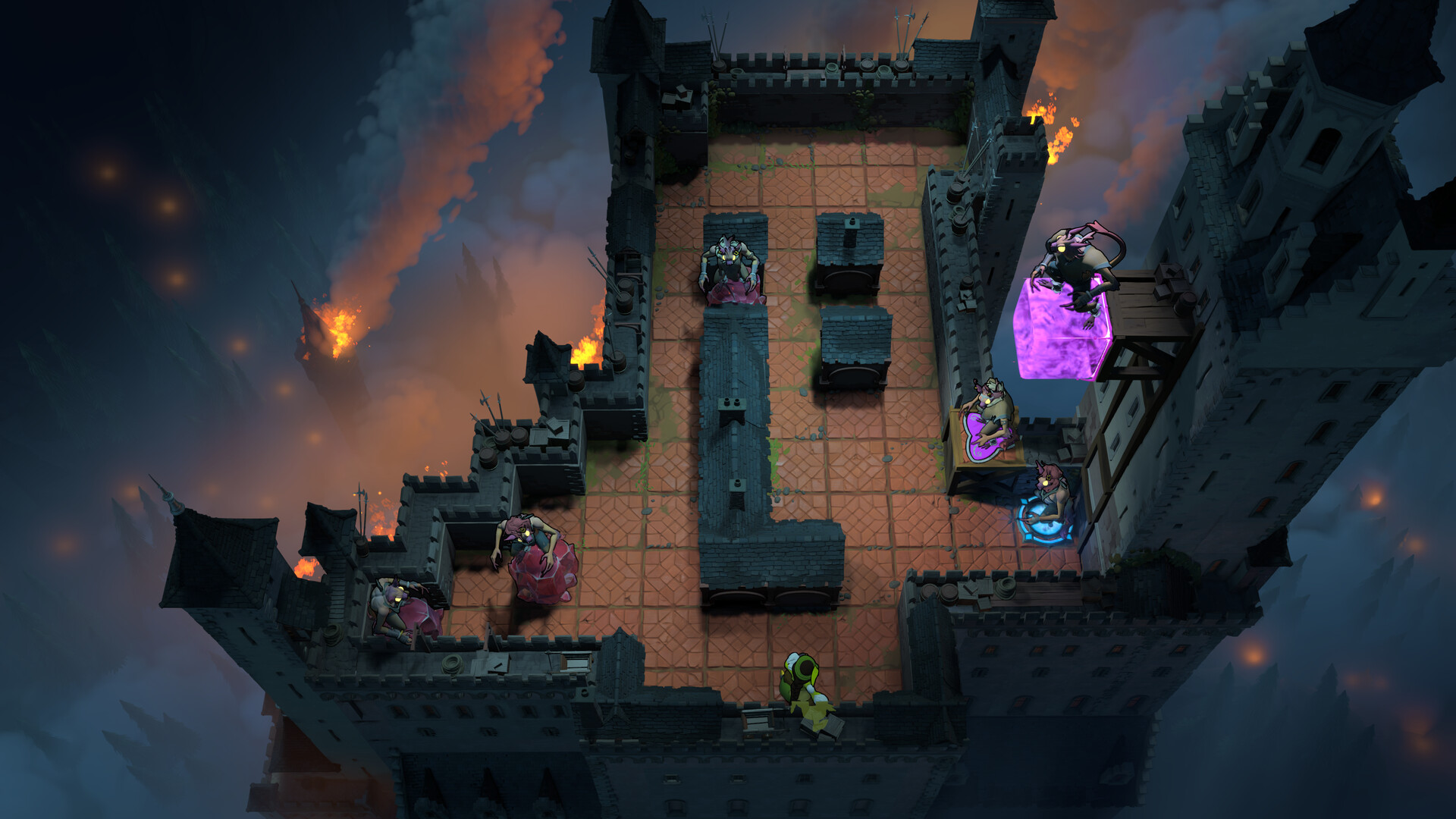
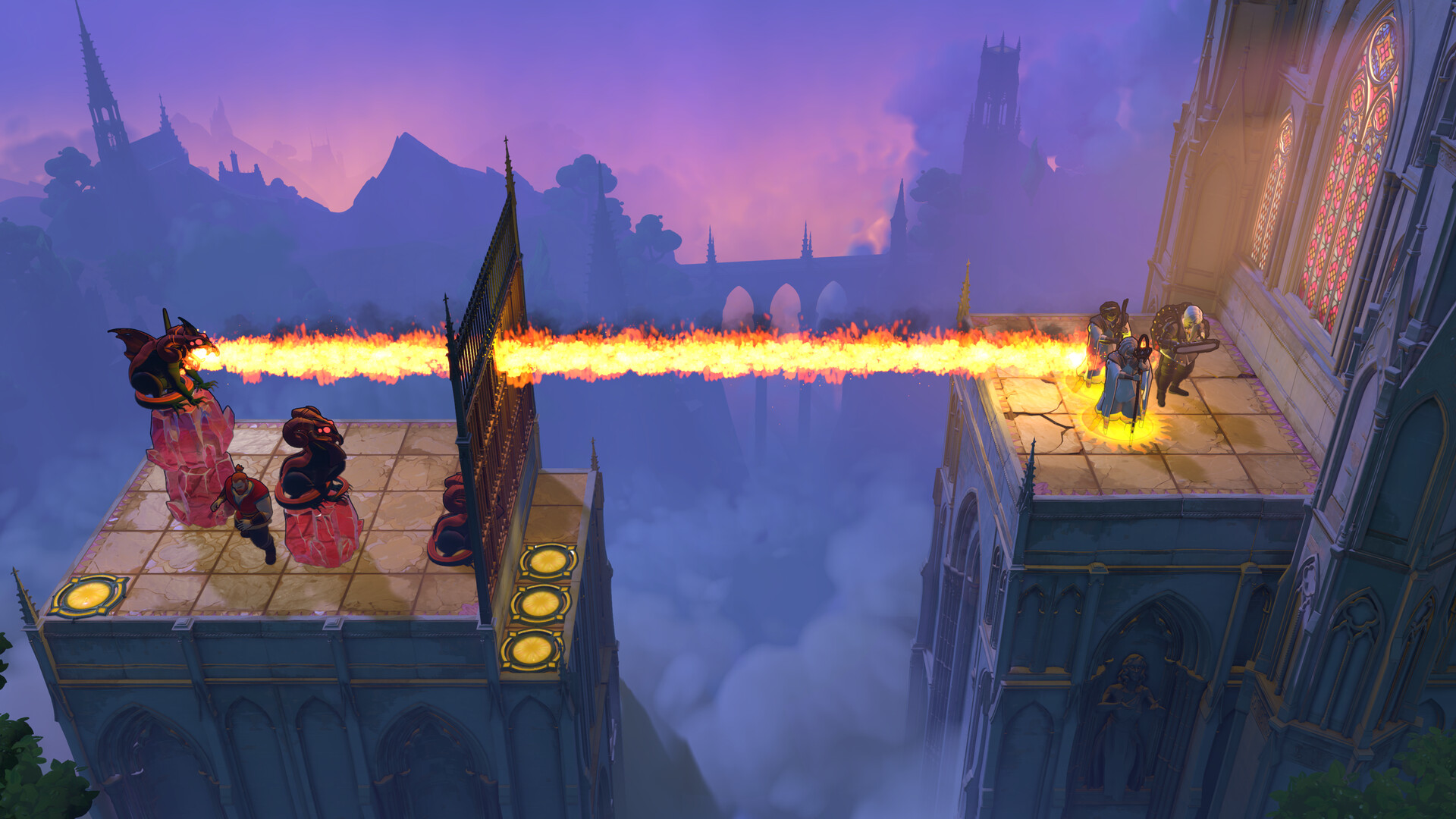
Later sections add a second layer on top of the party by introducing hazards that can be turned against each other. Enemies that face the player when adjacent, but not diagonally, create avoidance problems that read as much like a board game as a puzzle. Flame barriers that harm characters but not crystals invert the usual logic of what is safe to stand on.
The most satisfying discoveries in the region come from noticing that these systems interact in ways the game never explains. A crystal can be used as cover. An enemy can be moved into a flame. Two hazards can be arranged to eliminate each other, which turns a room that looked like a fight into an arrangement problem. The game does not announce any of this; it simply builds rooms where the possibility exists and waits.
That restraint is consistent with the rest of the design. The party region never tells the player that pushing is also a weapon or that gates will destroy what passes through them. It puts the tools on the board and trusts that the same instinct that solved the earlier regions will eventually arrive at the answer.
06 · SYSTEMS
What the Region Proves
Read as a whole, the northern region is an argument about what a puzzle game can vary without changing its core. No new terrain is introduced. No new interface is required. The verb underneath everything is still moving one character one square at a time, and the undo button still takes back exactly one of those moves.
What the region changes is the number of simultaneous truths the player has to hold. Every character is a rule, and the region's best puzzles are the ones where two or three of those rules have to be true at the same time in the same room.
That is why the party is more than a cast. It is the mechanism by which the game gets a second, third and fourth dimension out of a board that never changes shape, and the reason the region reads as the most inventive stretch of an already inventive game.
“Every character is a rule you have to keep in your head at the same time.”