DISPATCHES / CRITIQUE / 10 MIN READ
The Cast That Never Stops Talking
Order of the Sinking Star surrounds strong puzzle design with a party of characters who narrate nearly everything they do. Whether that is a feature or a fault depends entirely on what you came for, and the disagreement it produces is the most interesting thing about the game's reception.
01 · CRITIQUE
A Party, Not a Protagonist
One of the first things that separates this game from the puzzle tradition it descends from is that you are never alone with the board. Where earlier games in the genre offered a silent figure and an empty landscape, this one hands you a party — and the party has opinions, histories, and a great deal to say about all of it.
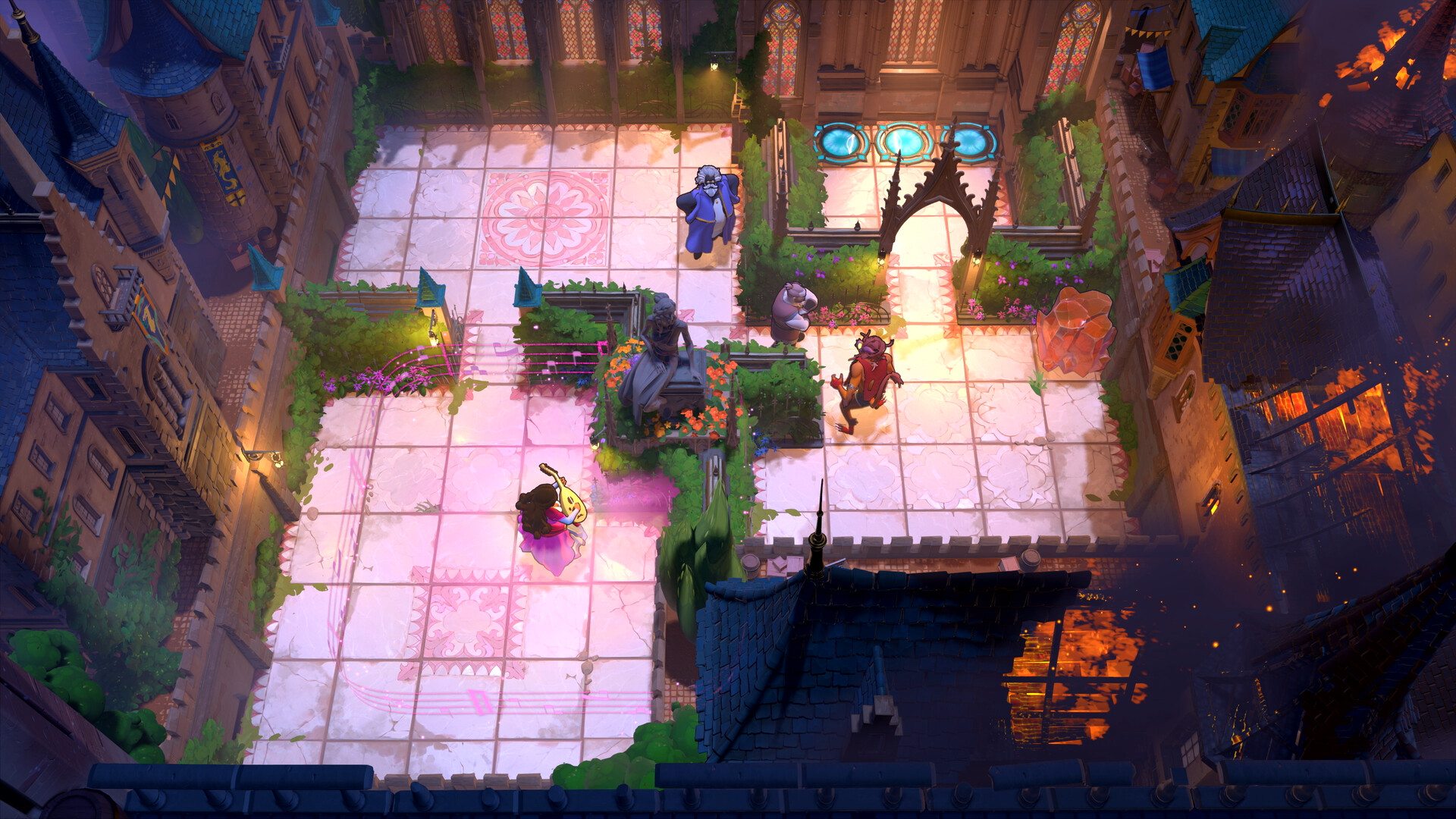
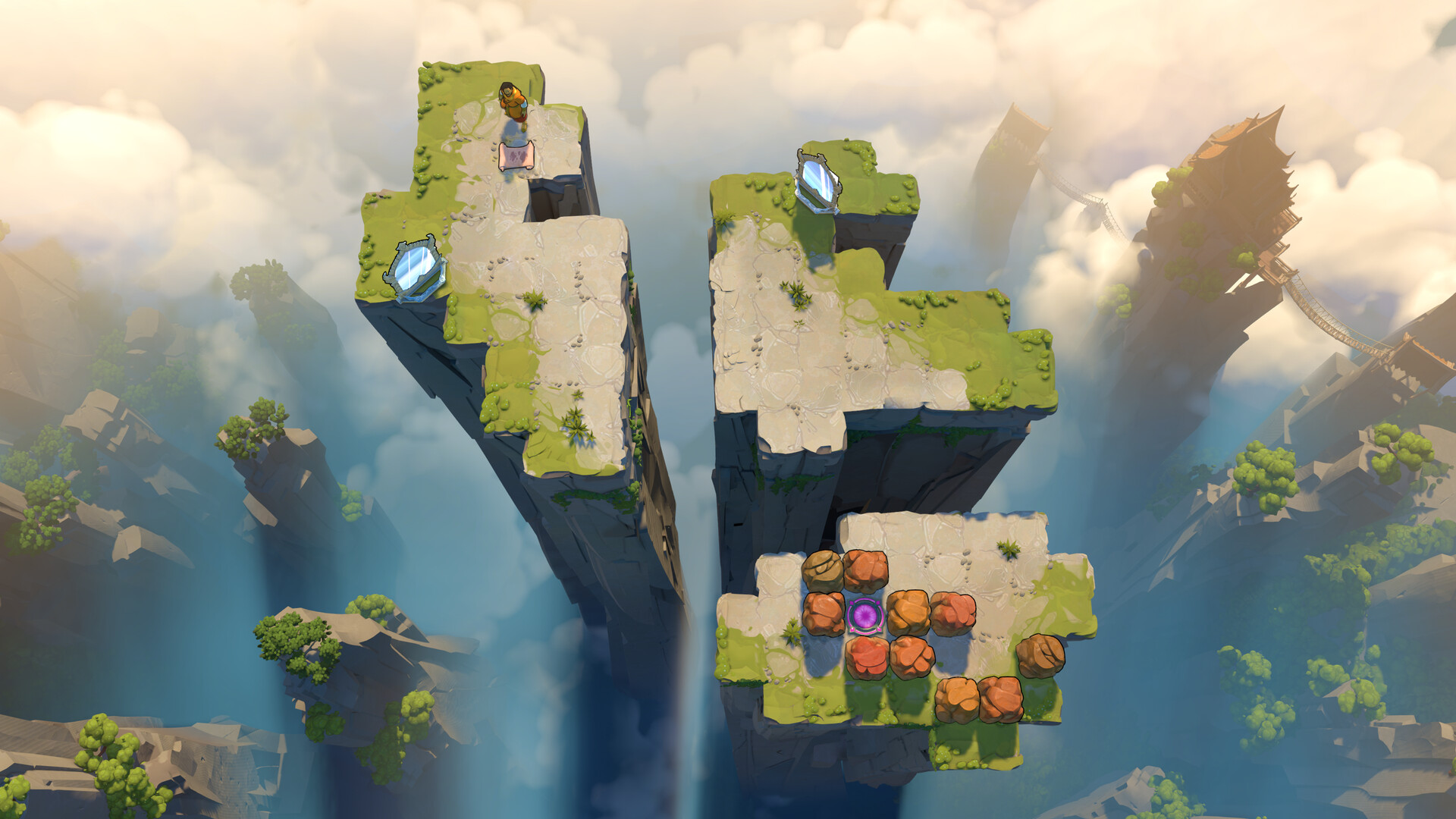
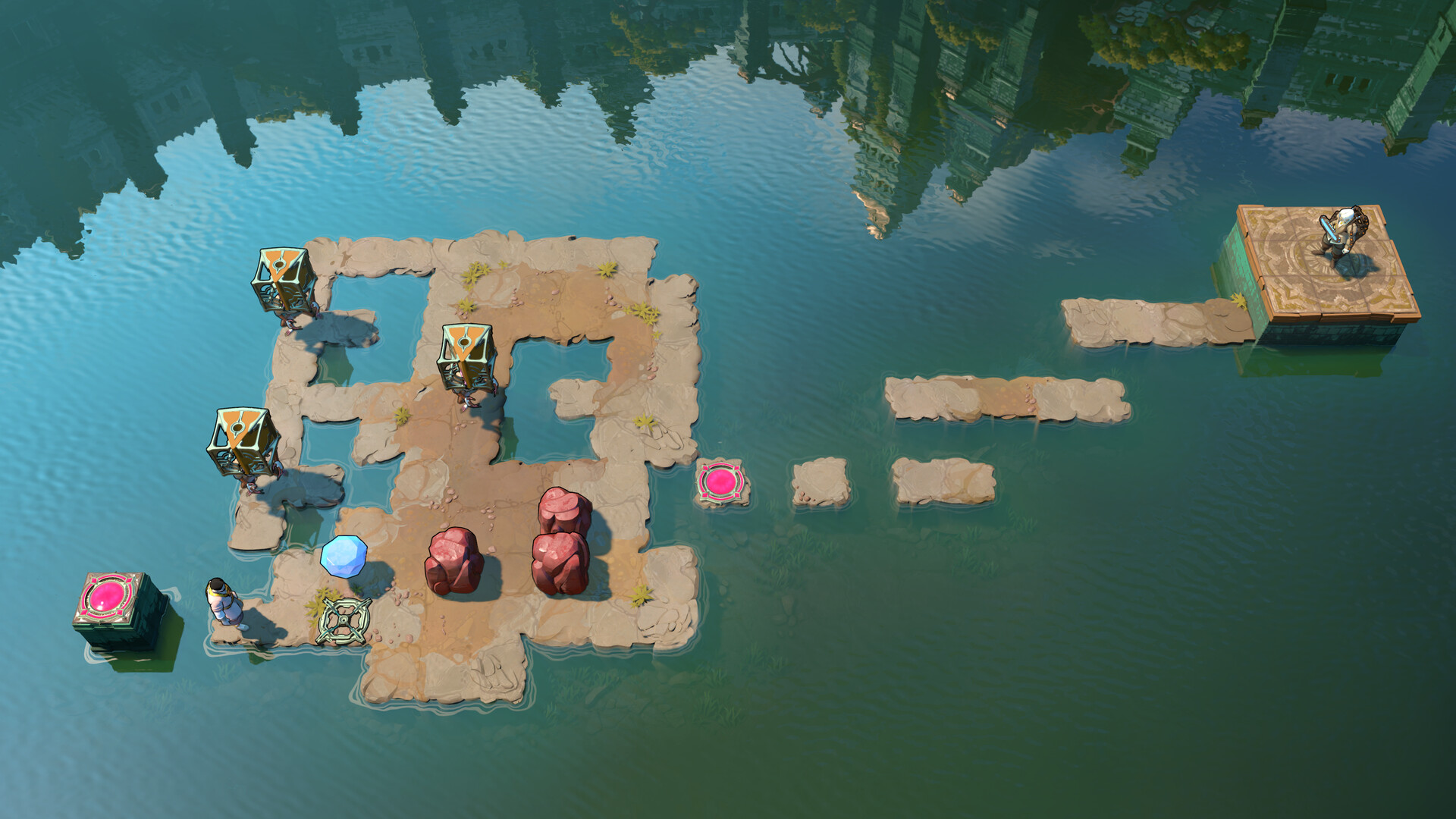
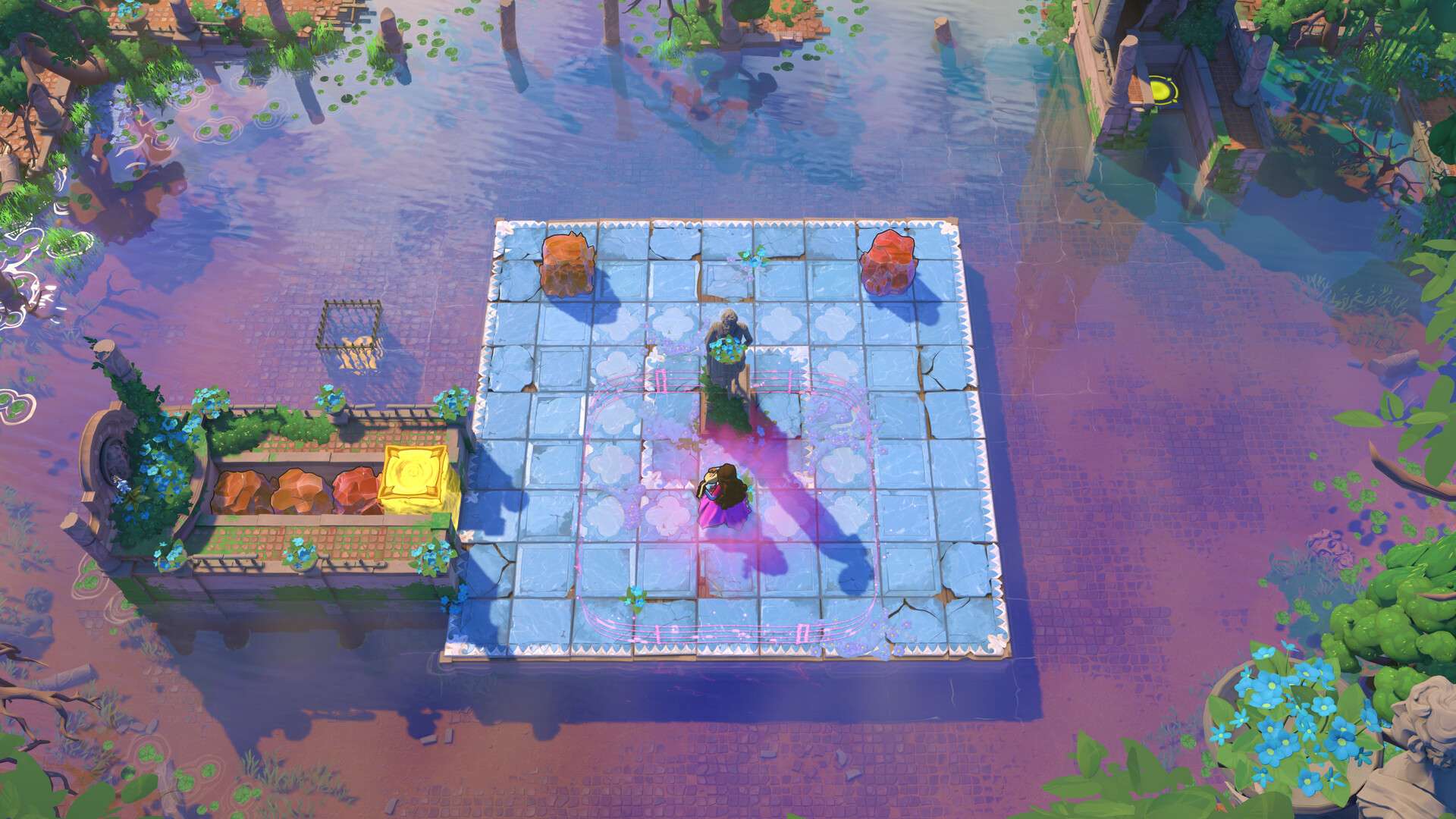
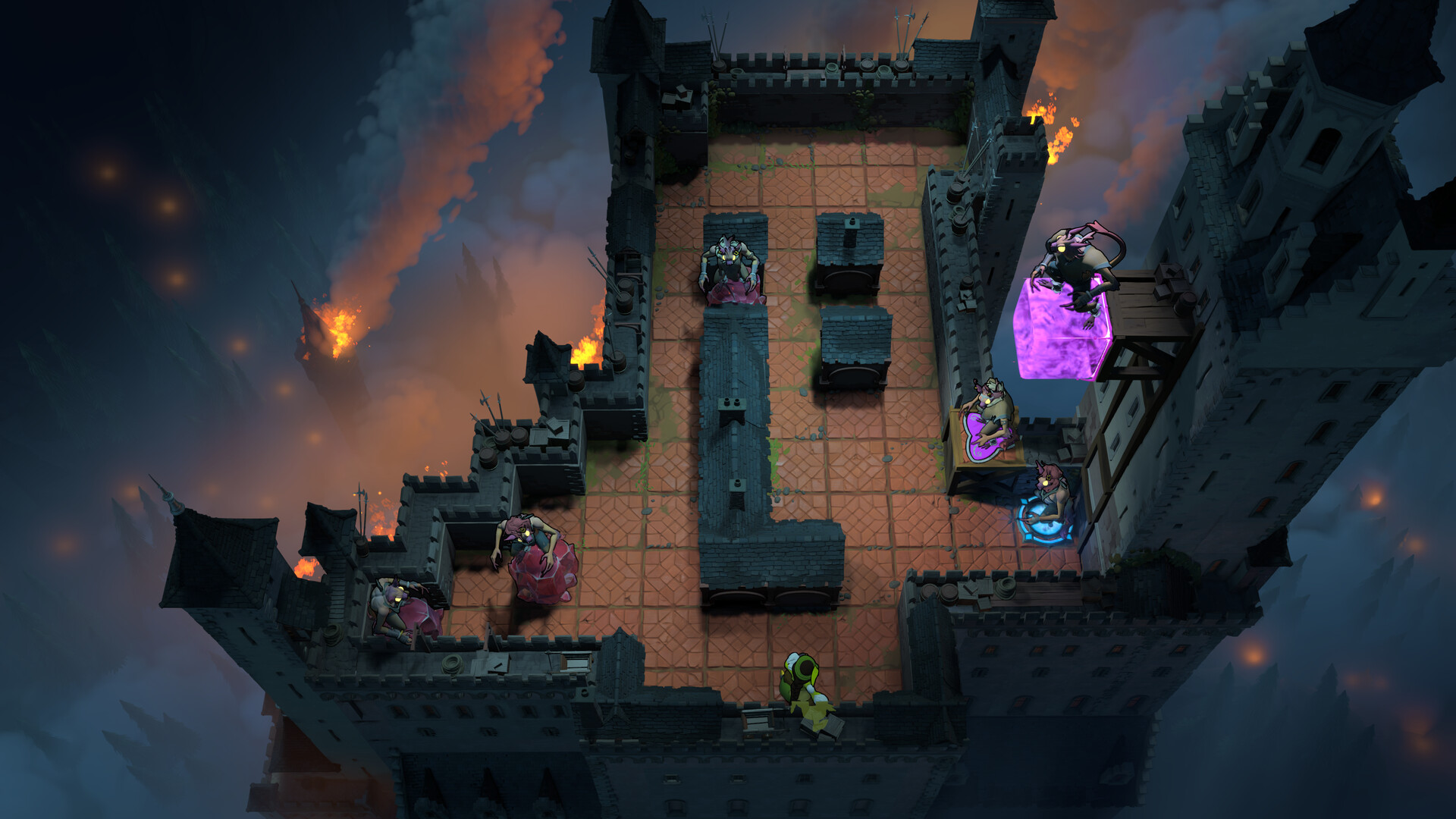
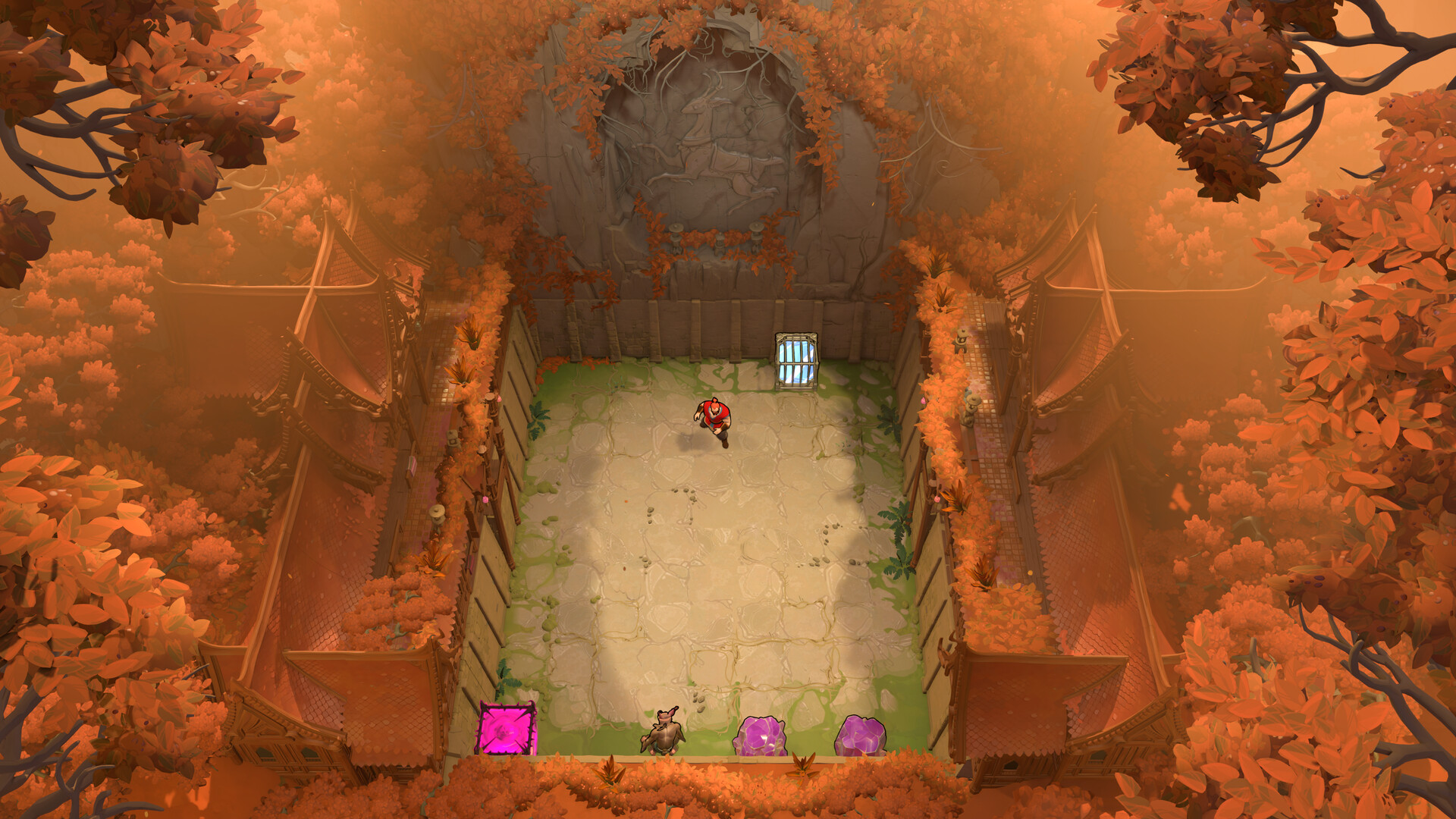
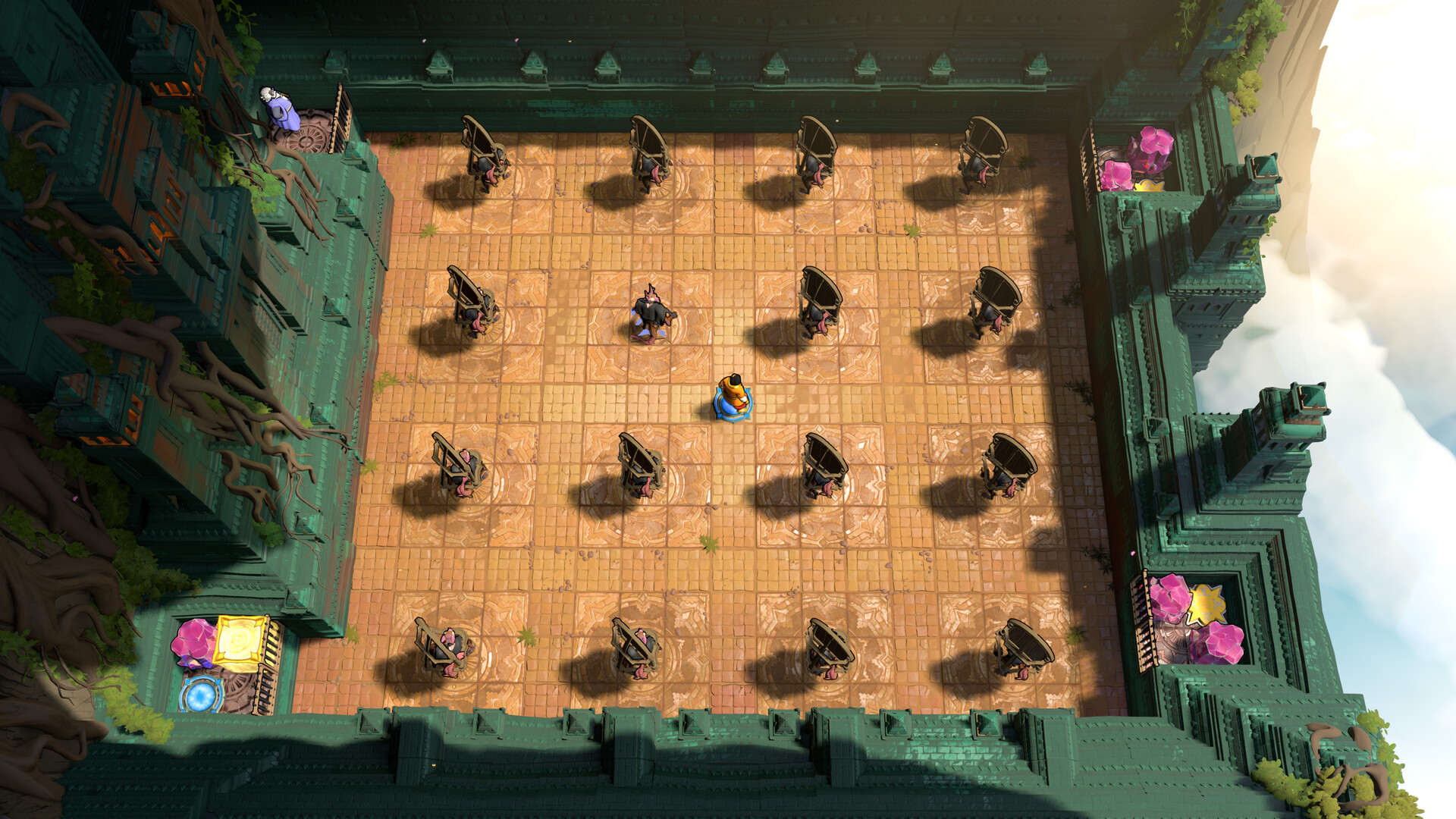
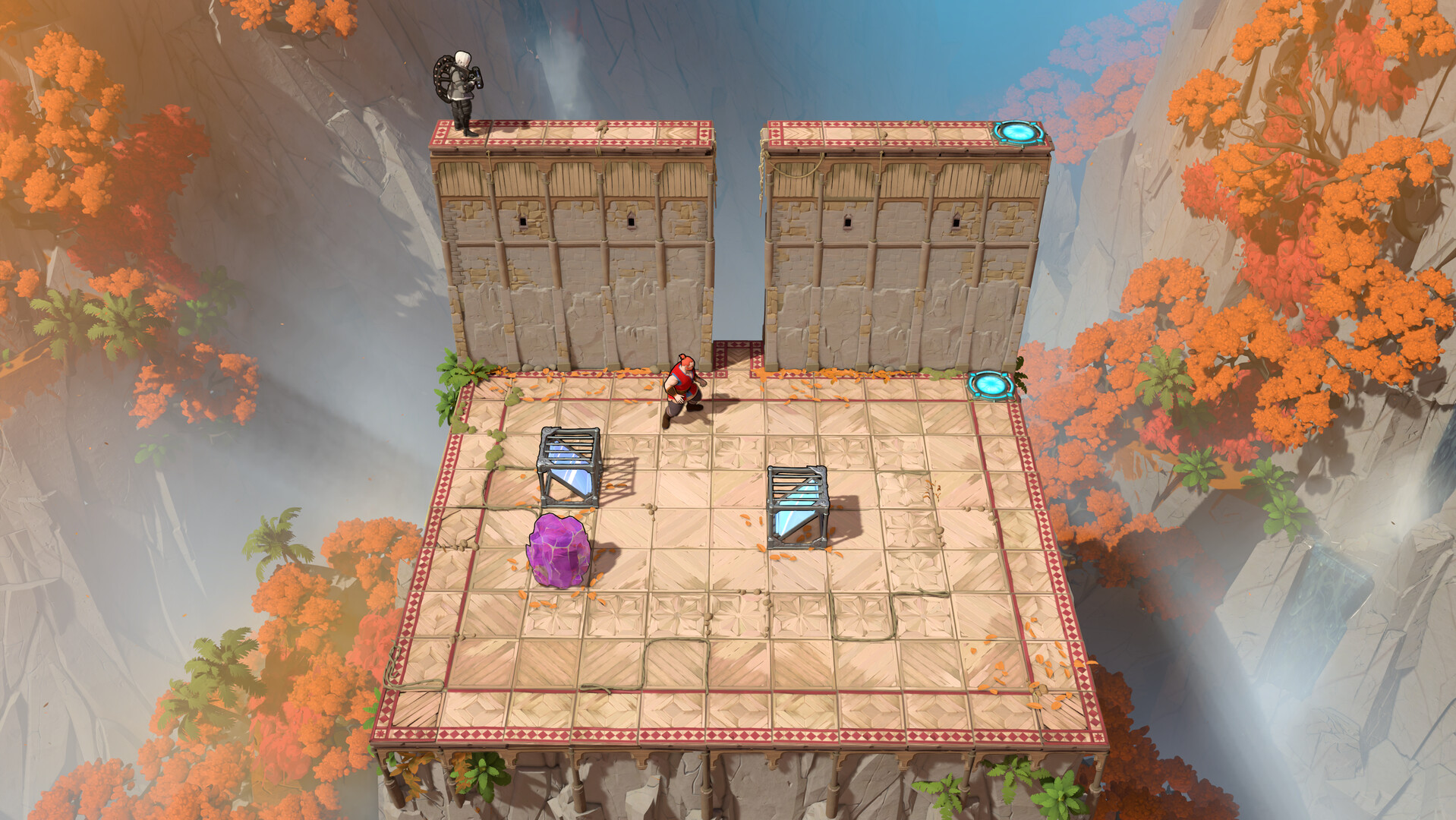
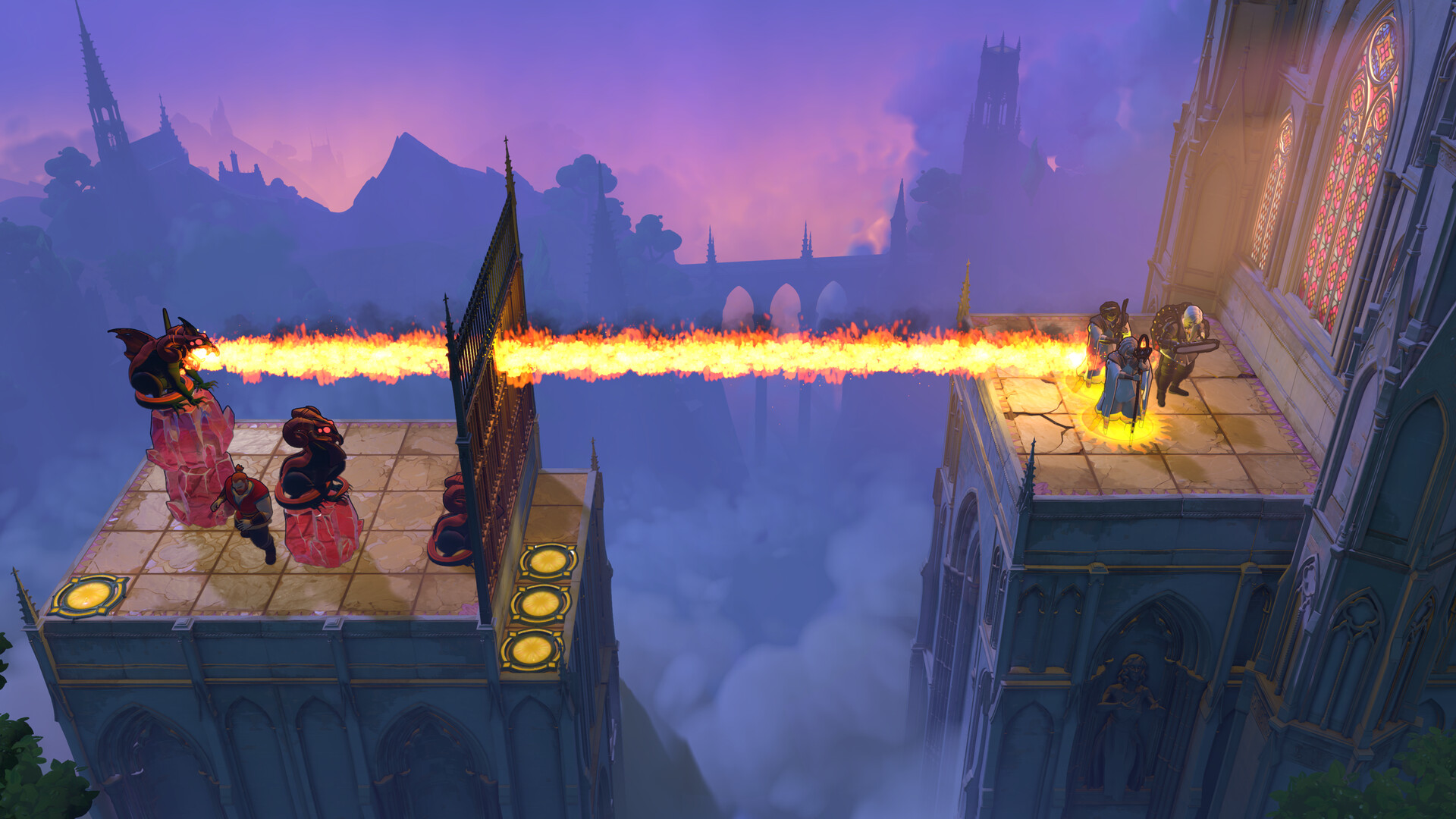
The structure that supports them is a set of character archetypes borrowed from role-playing games and then rebuilt as puzzle tools. There is a strongman who can shove several blocks at once where the default figure manages only one. There is a thief who cannot push anything at all but drags whatever she stands beside, whether or not the player intended it. There is a mage who swaps places with whatever he is facing. And there is a fourth figure who teleports whenever he looks at a crystal, which makes sightlines a resource to be managed rather than a detail to be ignored.
That cast is not decoration. Each of them turns the same grid into a different problem, and the game's later puzzles exist to force the player to hold several of those problems at once. On the mechanical level, the party is one of the best ideas in the game.
02 · CRITIQUE
The Volume of It
The trouble is that the same characters who make the puzzles interesting also spend most of the game talking, and they talk in a register that has divided players sharply.
The dialogue is written in the mode of a performed conversation rather than an exchange between two people. The characters bicker, riff, and narrate their own banter in a way that is aware of being watched — closer in feel to a recorded tabletop session or a stage sketch than to a story being told. Nothing in it is sharp enough to offend and nothing in it is funny enough to remember, and it runs almost continuously underneath the puzzle solving.
For a certain kind of player, this is precisely the appeal: a warm, chatty accompaniment to a slow, thoughtful activity, the video-game equivalent of a long-running show playing on a second monitor. For another kind, it is the single thing that keeps a well-built game from being recommendable. Both responses are honest, and the game does not hedge — it commits to its register completely.
03 · CRITIQUE
Two Kinds of Attention
The split is easiest to understand as a disagreement about what attention is for. A puzzle like this one asks for the whole of it: the board is dense, the rules stack, and the difference between a solved and an unsolved state is usually a single unnoticed detail. Layered dialogue competes directly with that demand, and when it loses the competition the player reaches for the volume control.
That is a real design cost, and it is worth naming rather than excusing. A game this careful about legibility in its visuals is noticeably less careful about legibility in its audio. The most common practical advice to come out of the critical response is not about a puzzle that is too hard or a mechanic that does not work — it is to turn the voices down, or off entirely, and keep the music.
It is an unusual recommendation to have to make for a game this accomplished, and it says something about how independently the two halves of the experience are judged by the people playing it.
04 · CRITIQUE
What the Talking Is For
The generous reading of the dialogue is that it exists to keep the party present as characters rather than as tools. A game that hands you four figures with wildly different abilities risks reducing them to icons on a grid; giving them voices, relationships and a shared predicament is one way to insist that they are people who were pulled into this place together.
The narrative that the talking carries is deliberately thin, and the game appears to know it. The party has been transported into a strange region of crystals and mechanisms, they do not know why, and the answer is not delivered in cutscenes so much as dribbled out in fragments between puzzles. The story is a justification for the mechanics rather than a rival to them, and the dialogue is the vehicle that keeps it circulating.
Judged on those terms, the writing is doing a job. Judged as writing, it is the most contested element of the game, and there is no version of the argument in which both sides are simply wrong.
05 · CRITIQUE
Why It Matters to the Puzzles
The strangest part of the whole debate is how little it has to do with whether the puzzles are good. They are. The rules are clean, the solutions are singular and logical, and the game resists the temptation to make its puzzles interpretive — there is one answer, and reaching it is a matter of understanding rather than of taste.
That clarity is exactly what makes the dialogue so divisive. When the core of a game is this well made, the surrounding choices are no longer neutral. A player can forgive a rough edge on a rough game; a rough edge on a clean one stands out, and the volume of talk is the edge most people name.
The useful conclusion is not that the game should have been silent. It is that the party is the game's most distinctive decision and its most polarising one at the same time, and any honest account of Order of the Sinking Star has to hold both of those facts at once.
06 · CRITIQUE
The Verdict, Qualified
Taken as a whole, the game arrives as a very well engineered puzzle set wrapped in a character comedy that lands for some players and grates for others. Both reactions are widely reported, and both are consistent with the same set of facts: excellent puzzles, a generous amount of them, and a party that will not stop explaining itself.
The practical advice that follows from all of this is unusually simple. If performed banter is your register, the game will feel warm and complete. If it is not, the puzzles are still worth the time, and the volume control is right there — which is a strange thing to say about a game this thoughtful, but an honest one.
“The puzzles are the argument. The talking is the tax.”